India is witnessing a historic transformation in urban development. At the heart of this shift lies the Dholera Special Investment Region (DSIR), a project destined to become a global manufacturing and trading hub. As India’s first greenfield smart city, the region is not just building roads and buildings; it is engineering a self-sufficient ecosystem. A critical component of this vision is the advanced Dholera Smart City energy management system, designed to ensure reliability, sustainability, and efficiency for industries and residents alike.
Unlike traditional cities that struggle with aging utilities, this greenfield smart city in the state of Gujarat is being built from the ground up. This allows planners to integrate smart technology directly into the city’s DNA, creating a robust framework for power, water, and waste management.
How is Dholera Smart City planning to meet future energy needs by 2026?
As we approach 2026, the strategic roadmap for Dholera is shifting from planning to execution. The authorities have set ambitious targets to ensure the city is energy-positive and resilient.
1. Commissioning the Massive Dholera Solar Park
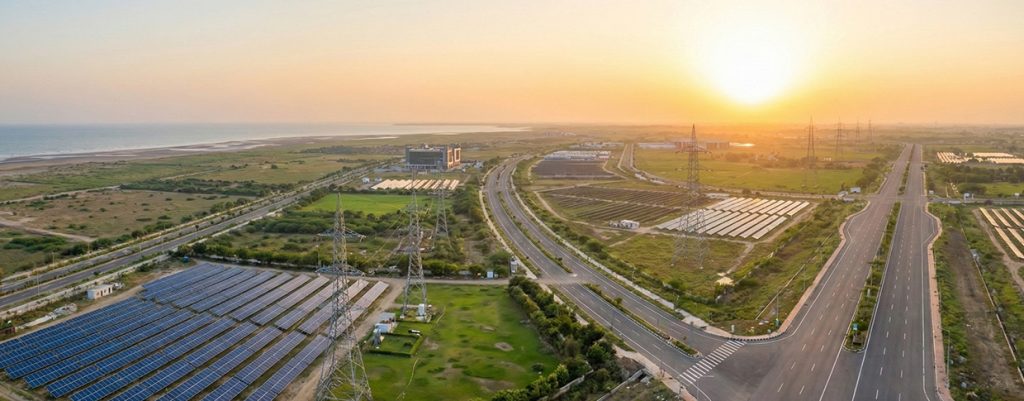
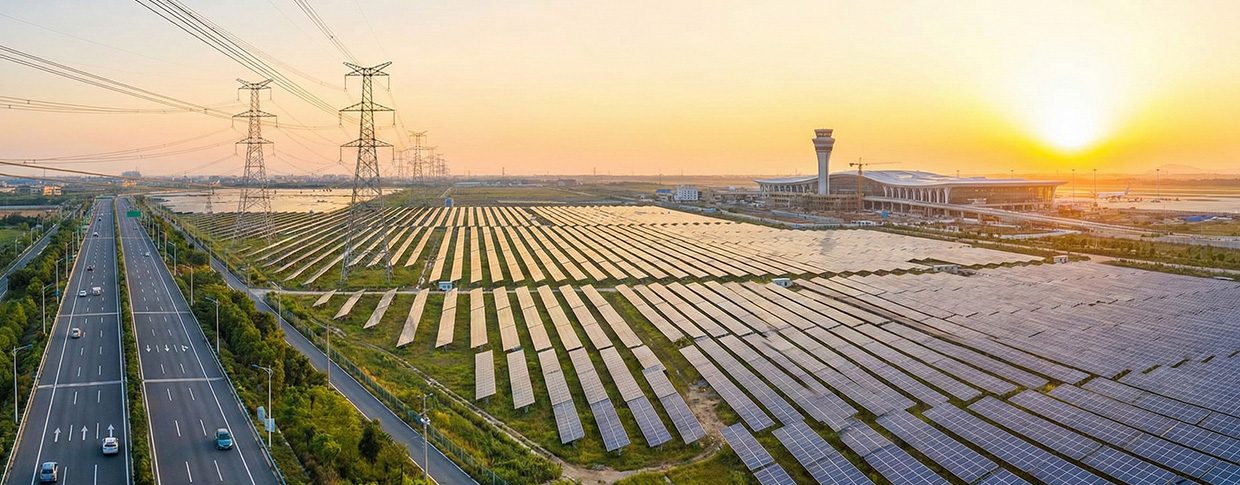
A massive cornerstone of the 2026 vision is the solar park. Located within the coastal regulation zone, this facility is one of the largest renewable energy projects in the country. By 2026, a significant portion of its total 5,000 MW capacity is expected to be operational. This massive influx of solar energy will not only power Dholera’s industrial facilities and residential zones but also feed excess power back into the national grid, reducing carbon emissions significantly.
2. Solar energy will power Dholera International Airport.
The Dholera International Airport is slated for operational readiness around the 2025-2026 timeline. The Dholera Smart City energy management system is currently scaling up to support this massive infrastructure project. Dedicated substations and green energy corridors are being established to ensure the airport operates with a minimal carbon footprint, utilizing clean energy for its day-to-day operations.
3. Smart Grid Activation for the Activation Area
By 2026, the “Activation Area” (22.5 square kilometers) will feature a fully functional smart grid. This system uses real-time monitoring to balance supply and demand. If a commercial space or factory experiences a load spike, the grid automatically adjusts distribution to prevent outages. This reliability is crucial for attracting global investors who require 24/7 uninterrupted power for precision manufacturing.
Dholera Smart City Energy Management vs. Other Cities?
When we compare the Dholera Smart City energy management protocols with other urban centers, the differences are stark. Most Indian cities are “brownfield” projects, which retrofit technology onto existing infrastructure. The DSIR, being a greenfield smart city, has a distinct advantage.
| Feature | DSIR / Dholera | Traditional Cities (e.g., Ahmedabad, Mumbai) |
| Grid Type | Smart Grid with 2-way communication | One-way traditional grid |
| Cabling | 100% Underground in ducts | Mostly overhead, prone to weather damage |
| Source | Heavy reliance on renewable energy (Solar) | Mostly thermal/fossil fuel-based |
| Monitoring | Centralized SCADA system | Fragmented monitoring systems |
| Efficiency | Automated Demand Response (ADR) | Manual load shedding during peaks |
Despite the high standards set by cities such as GIFT City, Dholera stands out due to its expansive 920 square kilometers. It offers industrial plots with “Plug & Play” utilities that other cities simply cannot match due to space and infrastructure constraints.
In addition to advanced grid technology and underground cabling, sustainability initiatives in Dholera support energy management through the integration of renewable energy sources, energy-efficient infrastructure, and real-time monitoring systems. These efforts help minimize power losses, optimize distribution, and reduce the city’s overall carbon footprint.
City Backbone: Integrated Smart Infrastructure
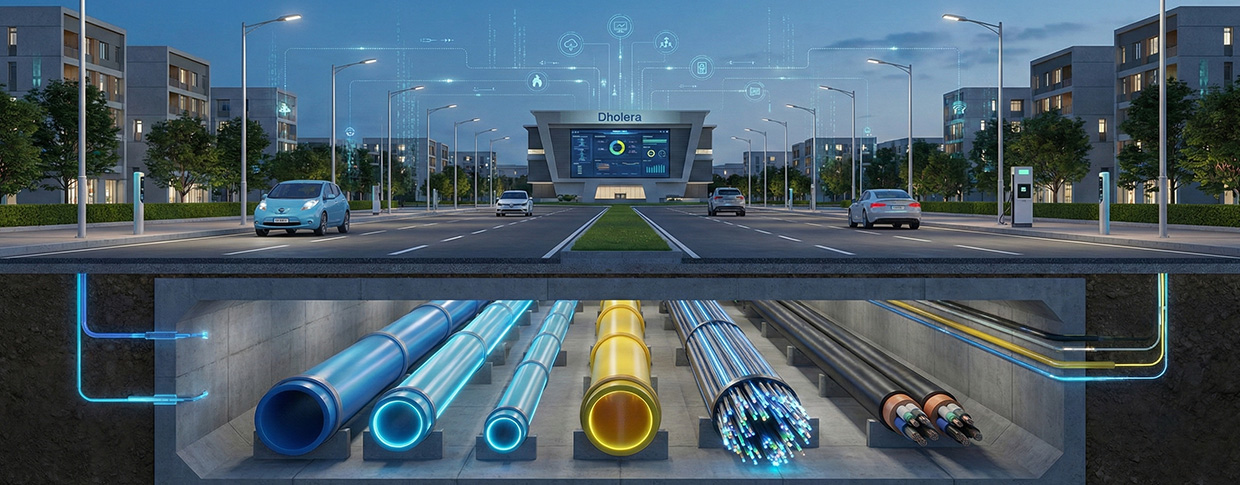
The integrated approach to utilities defines the Dholera Smart City project. The master plan ensures that power, water, and gas lines are all housed in dedicated underground utility tunnels.
Advanced ICT and SCADA Systems Integration
The city utilizes Information and Communication Technology (ICT) to manage its resources. The Central Command and Control Centre (CCCC) acts as the brain of the region. Here, operators monitor power consumption and water flow in real time. If a fire station detects an emergency or a sewage treatment plant reports a leak, the system alerts the necessary teams instantly.
Manage Water and Waste Smartly
Power is not the only resource being managed intelligently.
- Water Treatment: The city features a state-of-the-art water treatment plant, ensuring potable water is available 24/7.
- Smart Water Management: Sensors detect leaks immediately, preventing water loss—a common issue in older cities.
- Waste Management: The smart waste management system ensures efficient collection and disposal. Solid waste is segregated, and plans are in place to utilize waste-to-energy technologies, further supplementing the city’s power needs.
- Sewage Treatment: Advanced sewage treatment plants recycle wastewater for use in industrial zones and for maintaining green spaces, ensuring sustainable urban development.
Disaster Resilience: Power Network Protection
A key aspect often overlooked in urban planning is resilience against natural calamities. The Dholera Smart City energy management framework has been designed with the region’s coastal geography in mind.
Underground Cabling for Storm Protection
One of the greatest threats to coastal cities is cyclonic winds disrupting overhead power lines. Robust underground concrete ducts lay 100% of the cabling in Dholera. This ensures that even during severe weather events, the power supply to hospitals, the fire station, and critical industrial units remains uninterrupted.
Self-Healing Grid Capabilities
The smart grid technology employed here includes “self-healing” properties. In the event of a fault in one section of the network, the system can automatically isolate the affected area and reroute power through alternative pathways. This minimizes downtime and ensures that a localized issue does not cascade into a city-wide blackout.
Governance in Energy Management
The success of Dholera Smart City’s energy management is also due to its unique governance model. The Dholera Industrial City Development Limited (DICDL) acts as a Special Purpose Vehicle (SPV) that oversees all utility management.
Streamlined Utility Approvals
For industries setting up in the region, dealing with multiple agencies for power, water, and gas can be a bottleneck. The Dholera offers a single-window clearance system. The governance model guarantees the rapid provision of energy connections, fulfilling the “Plug & Play” promise.
Policy Support for Green Energy
The administration actively promotes policies that favor clean energy adoption. Incentives are structured to encourage developers and industries to utilize the available renewable resources, aligning with national goals for reducing carbon footprints.
Investment Opportunities and Industrial Growth
The robust infrastructure development has made the region a magnet for investment. The industrial growth strategy focuses on defense, aviation, electronics, and heavy engineering.
Why Investors are choosing Dholera
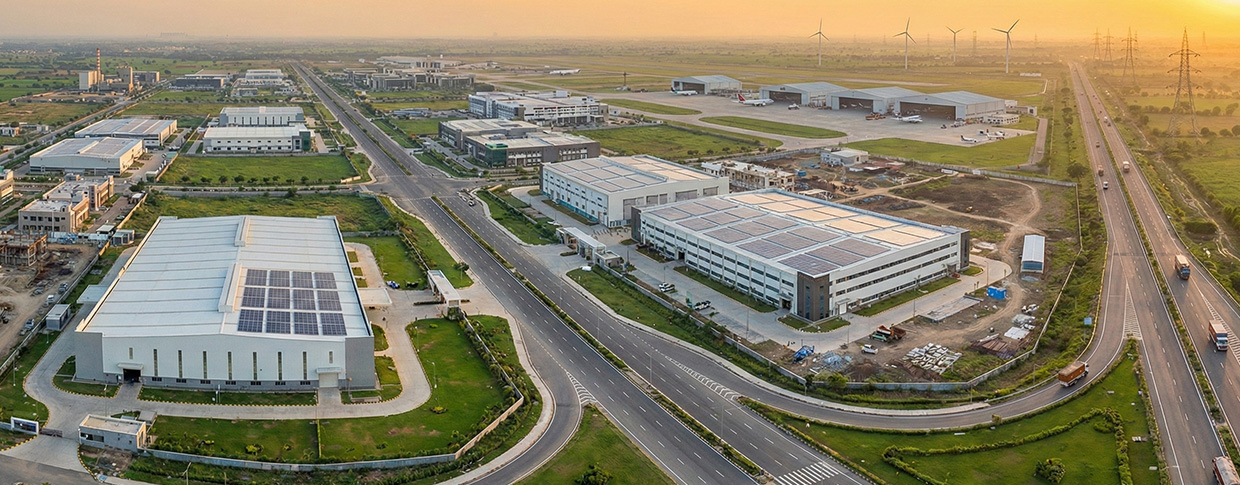
Global investors and domestic giants are securing industrial plots because the sophisticated energy management system guarantees lower operational costs. The availability of reliable clean energy helps companies meet their ESG (Environmental, Social, and Governance) goals. Furthermore, the strategic location near the Dholera International Airport and the excellent connectivity provided by the new expressway make logistics seamless.
Real Estate Potential and Economic Upliftment
Beyond industries, the real estate sector is booming. Residential plots and commercial spaces are seeing high demand. Early investors recognize that quality of life in a planned city with clean air, green spaces, and reliable utilities will command a premium in the future.
Carbon Credits and Economic Benefits for Businesses
The emphasis on renewable sources within the Dholera Smart City energy management plan opens up unique economic avenues for businesses.
Leveraging Renewable Energy Certificates (RECs)
Industries operating within Dholera that utilize solar power may be eligible for Renewable Energy Certificates. These certificates can be traded, providing an additional revenue stream for manufacturers. This financial incentive makes the region highly attractive for energy-intensive industries looking to offset their operational costs.
Reduced Carbon Tax Liability
As global regulations on carbon emissions tighten, companies located in a city powered primarily by renewable energy projects will face fewer penalties. This future-proofing is a significant draw for multinational corporations planning long-term operations in India.
Living in the Dholera: A Sustainable Lifestyle
For future residents, the city’s approach to energy translates to a hassle-free life.
- Smart Homes: Residential zones are compatible with smart home automation, allowing residents to track their power usage via mobile apps.
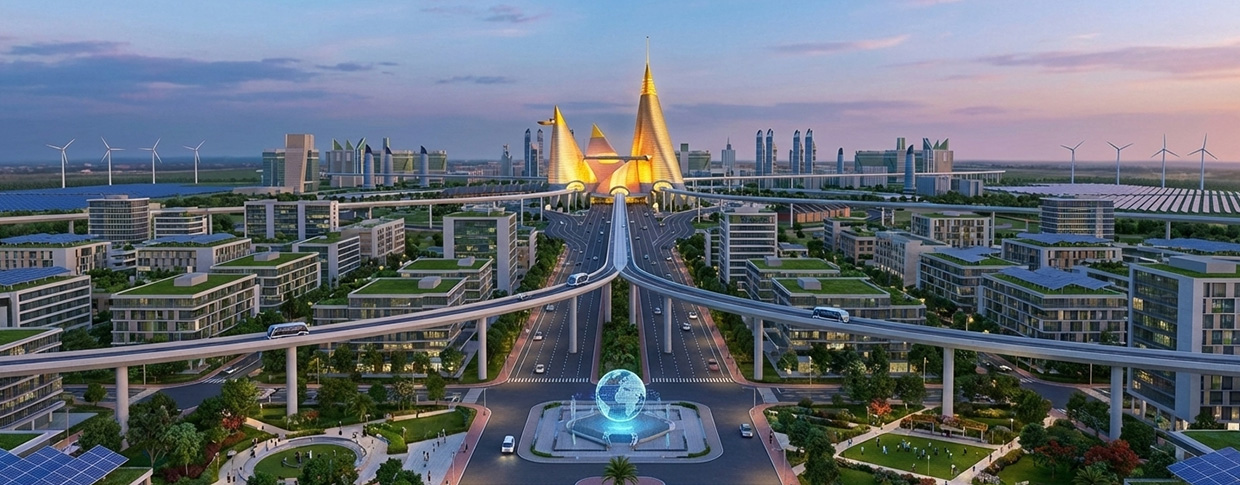
- Public Transportation: The city is designing an integrated public transportation network, likely powered by electric mobility, to reduce environmental impact.
- Environment: Extensive green spaces and strict controls on air quality ensure a healthier living environment compared to crowded metros.
- Social Infrastructure: World-class educational institutions, healthcare, and recreational areas are part of the master plan, ensuring a holistic, sustainable living experience.
Infrastructure connectivity supports energy goals
The success of the energy and industrial sectors relies on physical connectivity.
- Roads: A 6-lane expressway connects Dholera to Ahmedabad.
- Rail: A dedicated freight corridor linkage is planned.
- Air: The Dholera International Airport will serve as a global gateway.
This advanced infrastructure ensures that the region is not an isolated island but a well-connected economic engine.
Conclusion: Dholera Smart City energy management
The Dholera Smart City energy management system is a testament to what India can achieve with forward-thinking urban planning. By targeting specific milestones for 2026, such as the operationalization of the solar park and the airport, the city is proving its commitment to sustainable development.
For investors, residents, and industries, the Dholera offers a glimpse into a future where clean energy, smart infrastructure, and quality of life coexist. As India’s first greenfield smart city matures, it will undoubtedly serve as a blueprint for the rest of the world.


