
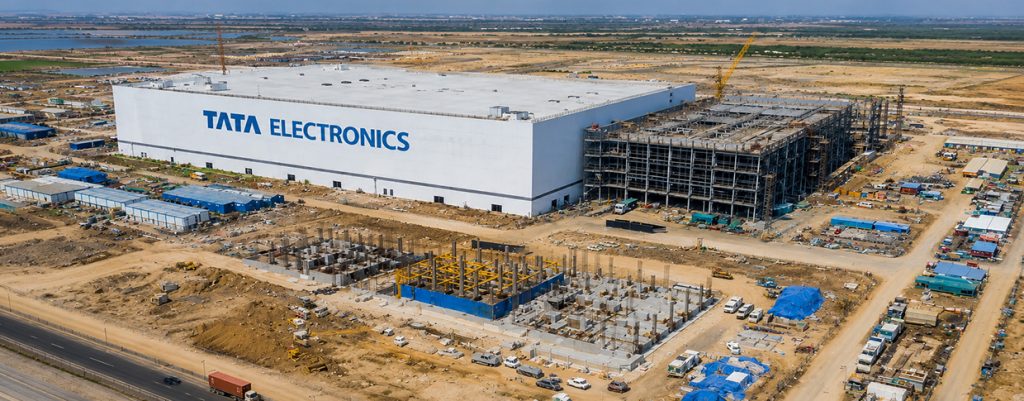
India’s chip manufacturing journey is no longer a distant ambition — it is steel, concrete, and cleanrooms rising from the ground in Dholera Special Investment Region, Gujarat. At the centre of it all stands the Tata Electronics fabrication facility, a ₹91,000 crore project rewriting what is possible for India’s chip ecosystem. This is not just a factory. It is a defining moment for a nation that has long depended on imported chips to power everything from mobile phones to data centers, electric vehicles to defence systems.
This blog covers everything you need to know about the Tata semiconductor plant in Dholera — what it is, what it will make, who is involved, when it opens, and why it matters for India’s future in the global chip industry.
What Is the Tata Semiconductor Plant in Dholera?
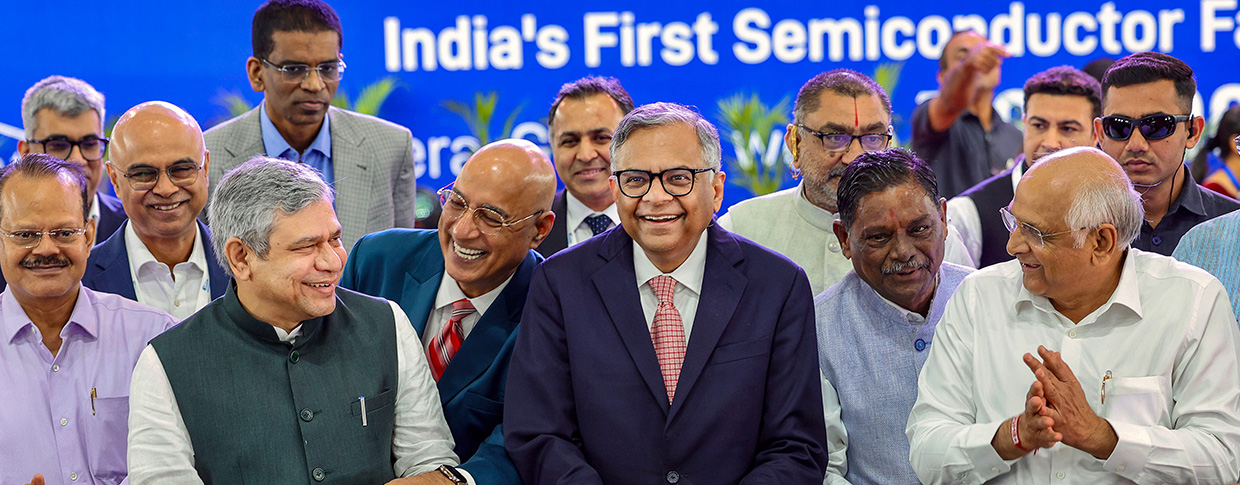
The Tata semiconductor plant in Dholera is India’s first full-scale chip fabrication plant — a greenfield fab built by Tata Electronics, a wholly owned subsidiary of Tata Group, in partnership with Taiwan’s Powerchip Semiconductor Manufacturing Corporation (PSMC). The facility sits in the Dholera Special Investment Region, approximately 100 kilometres south of Ahmedabad, Gujarat.
India’s First Chip Fabrication Facility
The total investment stands at approximately ₹91,000 crore (~US$11 billion), making it the largest domestic semiconductor manufacturing project ever undertaken on Indian soil. At full production capacity, the fab will produce up to 50,000 wafers per month, translating to roughly 3 billion semiconductors annually.
India currently imports nearly all the chips it consumes. The country’s domestic chip industry was worth approximately USD 38 billion in 2023 and is projected to cross USD 100 billion by 2030. Every chip powering an Indian smartphone, an automotive control unit, or a data storage device today comes from overseas — primarily from South Korea, Taiwan, or China. The Tata chip fabrication plant changes that equation permanently.
For Dholera Smart City, this investment is equally transformative. The region was designated as a digital infrastructure and manufacturing hub under India’s Smart Cities Mission, and this fab is its most high-profile anchor project. It brings world-class chip-making equipment, tens of thousands of skilled professionals, and a wave of supplier investments already reshaping the region’s industrial landscape.
When Will the Tata Semiconductor Plant in Dholera Open?
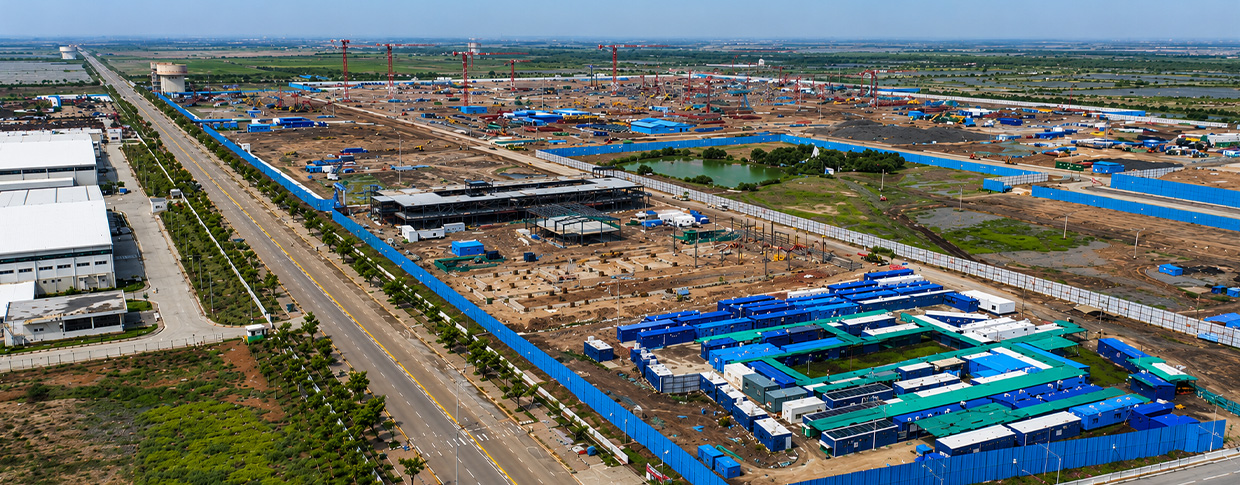
Construction of the fabrication facility began in 2024 and has progressed rapidly. As of April 2026, the project has reached 50% completion. Foundation work is finished, and the facility is now transitioning into its most technically demanding phases — cleanroom installation, equipment integration, and process calibration.
Trial Production Timeline: December 2026
Trial production is targeted for late 2026 — specifically around December 2026, as confirmed by Dr Randhir Thakur, CEO and Managing Director of Tata Electronics. This phase will involve initial manufacturing runs to test processes, calibrate fab equipment, and validate output quality against global standards. Full commercial-scale production is expected to ramp up progressively through 2027 and 2028, as the fab scales toward its full 50,000-wafer-per-month production capacity.
ASML Partnership Secures the Timeline
To keep this schedule on track, Tata Electronics has signed a landmark agreement with Dutch lithography giant ASML for a suite of advanced holistic lithography solutions. Given the 18 to 24 month lead times typical for lithography scanners, securing ASML’s technology now is critical for meeting the 2026 target. The deal was signed by both CEOs in the presence of heads of government, underlining its strategic weight.
Additionally, INOX Air Products has begun constructing a specialty gas facility in Dholera to supply ultra-high-purity gases to the Tata fab — a sign that the broader semiconductor ecosystem around Dholera is already taking shape.
What Will the Tata Semiconductor Plant in Dholera Produce?
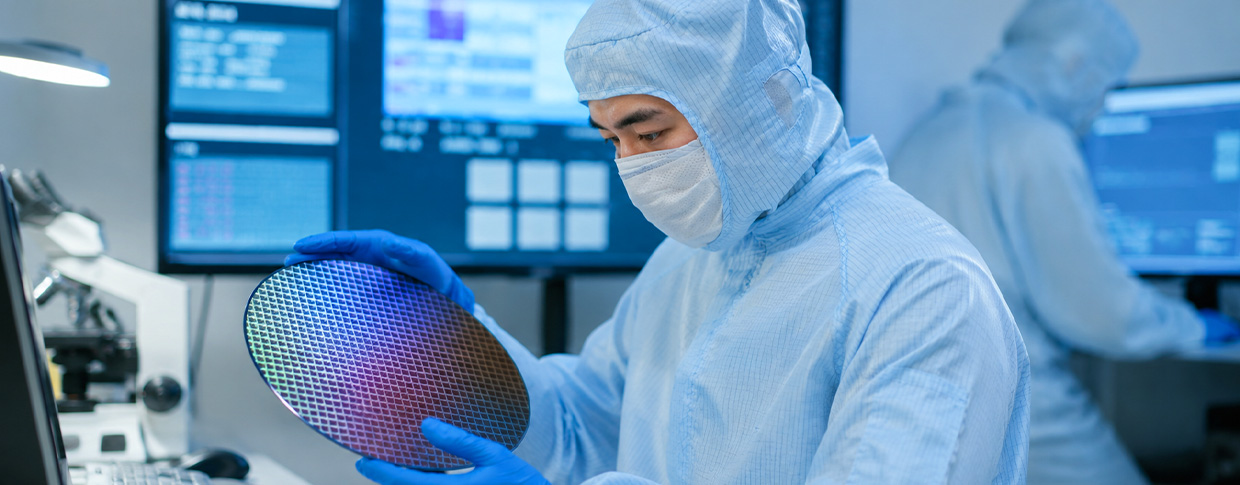
The fabrication facility in Dholera operates as a multi-product facility. It manufactures a broad portfolio of chips that serve multiple high-growth industries.
According to PSMC Chairman Frank Huang, the facility will begin production with 28-nanometer chips, and the technology roadmap will extend down to 22 nm as the fab matures. These nodes serve a deliberate purpose — they do not represent cutting-edge technology like 3nm chips, but they act as the workhorse nodes powering the vast majority of global chip demand. The global chip industry consumes enormous volumes of 28nm and legacy-node chips for applications that do not require the most advanced processes.
Chip Categories for Advanced Chip Manufacturing in India
The semiconductor categories planned for production at the Dholera fab, therefore, include power management ICs for electric vehicles, as well as telecom infrastructure and industrial systems; in addition, display drivers for consumer electronics and smartphones; furthermore, microcontrollers for automotive and IoT applications; additionally, high-performance computing semiconductors for artificial intelligence workloads and data centers; automotive electronics semiconductors for vehicle safety and ADAS; data storage controllers; and, finally, wireless communication semiconductors supporting 5G infrastructure.
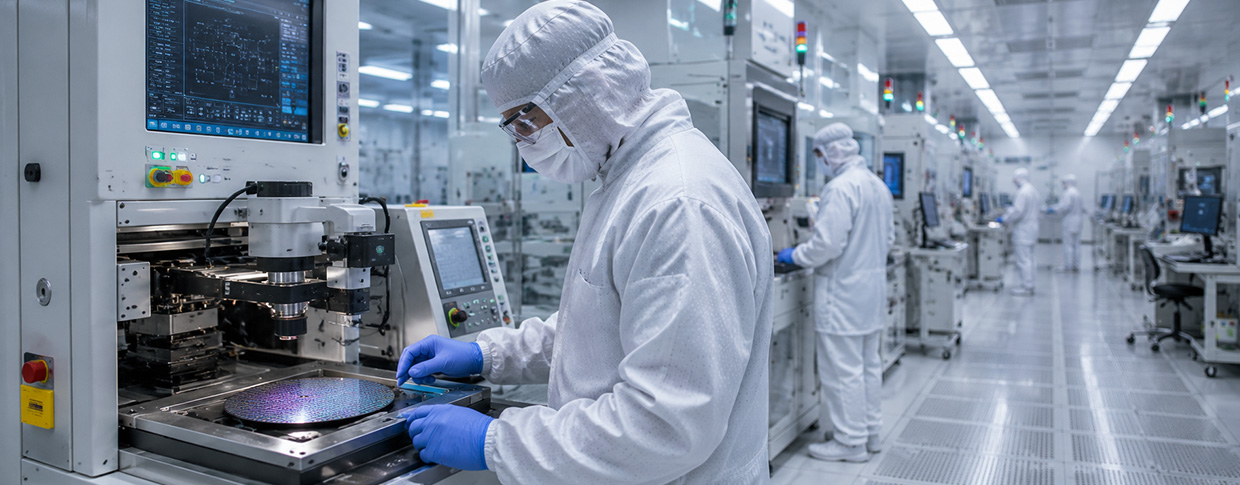
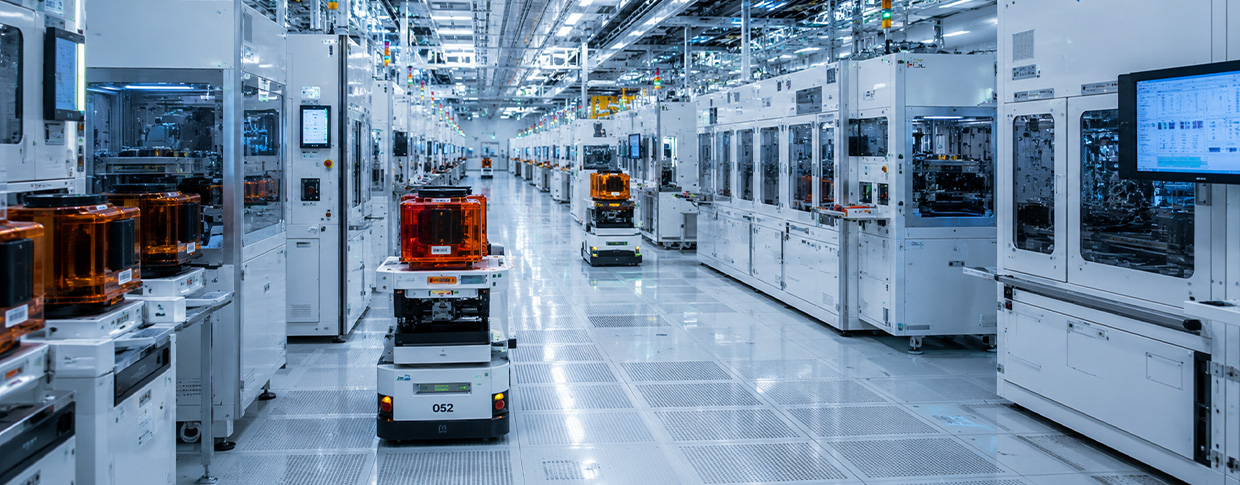
The fab will also deploy next-generation factory automation using data analytics and machine learning to achieve industry-best efficiency. This smart manufacturing approach ensures consistent semiconductor quality from day one of trial production. One area worth watching is compound semiconductors—materials like silicon carbide (SiC) essential for high-efficiency power electronics in electric vehicles and renewable energy applications. India’s semiconductor value chain roadmap includes compound fab capacity, and Dholera’s infrastructure is being built to accommodate that expansion over time.
How Does the Tata Dholera Fab Support India’s Semiconductor Mission?
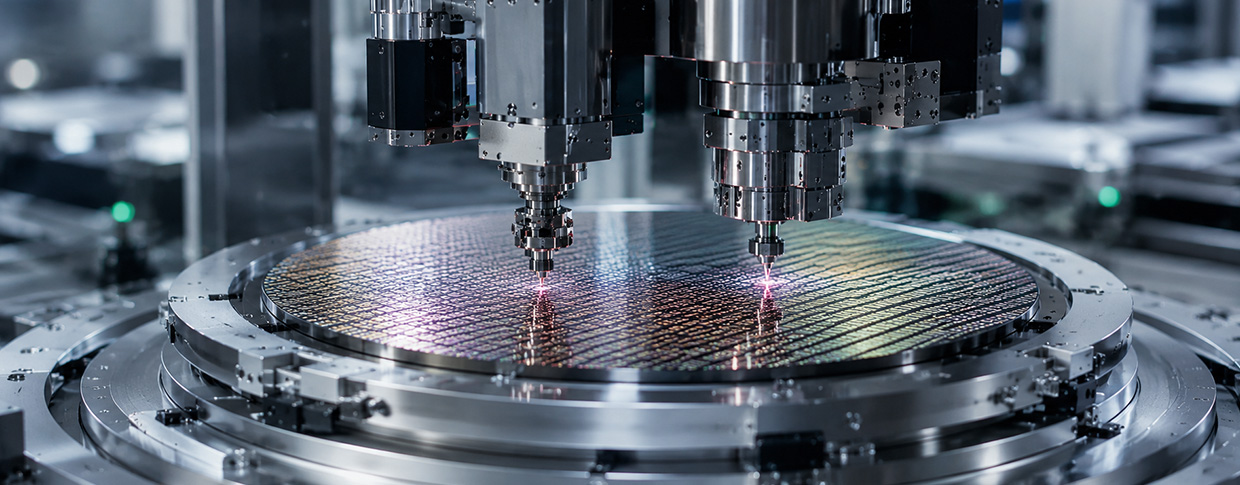
The Tata semiconductor plant in Dholera is the flagship project of India’s semiconductor mission — formally known as the Semicon India Program, launched in January 2022 by the Ministry of Electronics and Information Technology (MeitY). The program aims to build a complete semiconductor ecosystem spanning chip design, semiconductor fabrication, chip assembly, testing, packaging, and module manufacturing.
India Semiconductor Mission and Government Incentives
The government has committed a ₹76,000 crore incentive framework under India Semiconductor Mission (ISM), offering fiscal support of up to 50% of project cost — structured as capital subsidies—for approved silicon fabs, compound semiconductor units, OSAT facilities, and semiconductor design projects. Of this, nearly ₹65,000 crore has already been committed across approved projects.
Prime Minister Narendra Modi has personally championed this mission, inaugurating the Kaynes Semicon plant at Sanand in March 2026 and positioning India’s semiconductor sector as central to national economic security. The government has now approved 10 projects with cumulative investment commitments of approximately ₹1.6 lakh crore.
Gujarat’s state government reinforces the central support with its own incentive layer — offering up to 40% capital subsidy on top of central-level backing, full reimbursement of stamp duty and registration fees, discounted power and water tariffs, and up to 75% land subsidy for the first 200 acres in Dholera’s designated “Semicon City” zone, alongside fast-track clearances.
The Tata fab sits at the fabrication tier — the most complex and capital-intensive segment of the semiconductor value chain. Its success demonstrates that India can credibly host full-scale chip production, not just assembly and testing. That proof point is what unlocks downstream investment in chip design, materials supply, and the dozens of ancillary industries that cluster around a mature semiconductor manufacturing ecosystem.
What Is the Size and Capacity of the Tata Dholera Fab?
The numbers behind the Tata semiconductor plant in Dholera are genuinely impressive: a site area of 66.2 hectares, wafer production capacity of up to 50,000 wafers per month, annual chip output of approximately 3 billion chips, and process nodes spanning 28nm to 110nm — covering the dominant demand range of global chip supply chains. The ₹91,000 crore investment is a joint endeavour between Tata Electronics and Taiwan’s Powerchip Semiconductor Manufacturing Corporation.
PSMC’s Global Foundry Expertise
PSMC operates six semiconductor foundries in Taiwan and is renowned in the global chip industry for its logic and memory foundry services across a range of process nodes. That operational experience, combined with Tata Group’s execution capability and India’s government initiatives, creates a partnership with real credibility. A capacity of 50,000 wafers per month places the Dholera fab among mid-to-large scale facilities worldwide, capable of serving both domestic demand and global chip supply chains simultaneously.

What Government Incentives Support the Tata Semiconductor Plant in Dholera?
Government support for India’s chip manufacturing ambition operates at multiple levels, and the Tata Dholera fab has benefited from the full structure.
Central Government Support Under ISM
At the central government level, India Semiconductor Mission under the Ministry of Electronics and Information Technology provides up to 50% capital subsidies on the total project cost for fabrication projects — disbursed on a pari-passu basis as construction milestones are met. Companies also get access to the Semicon India Programme ecosystem, including support for equipment procurement, talent development, and semiconductor infrastructure. The Design Linked Incentive (DLI) Scheme supports chip design companies across the chip value chain, creating a pipeline of domestic customers for the fab’s foundry services.
Gujarat State Incentives for Advanced Chip Manufacturing in India
At the state level, Gujarat’s chip industry policy adds up to 40% additional capital subsidy, full reimbursement of stamp duty and registration fees, discounted power and water tariffs, up to 75% land subsidy in Dholera’s Semicon City zone, fast-track single-window regulatory clearances, and pre-built digital infrastructure, logistics, and workforce accommodation. This stacked incentive structure makes the Tata semiconductor plant in Dholera financially viable at a scale that might otherwise have taken a decade longer to achieve.
Who Are the Key Partners in the Tata Dholera Fab?
The Tata semiconductor plant in Dholera is a multi-stakeholder project involving global technology leaders, government bodies, and industrial supply chain partners.
Tata Electronics is the primary developer and operator. Under CEO Dr Randhir Thakur, the company entered the global chip industry formally with this project and has assembled a world-class technical team to execute the fab. Taiwan’s Powerchip Semiconductor Manufacturing Corporation (PSMC) is the technology and manufacturing partner, contributing deep expertise in chip fabrication, process know-how, and operational best practices honed across six foundries in Taiwan.
ASML (Netherlands) has signed a partnership to supply advanced lithography tools and engineering support — a strategic signal that India is being welcomed into global chip supply chains as a trusted partner. Merck (Germany) is in advanced discussions to become the exclusive specialty chemicals supplier for the fab’s fabrication processes. INOX Air Products has begun constructing a dedicated specialty gas facility in Dholera, an essential input for chip production.
India Semiconductor Mission (ISM) under MeitY is the policy enabler, fiscal support provider, and long-term ecosystem architect. The Gujarat state government plays a crucial role as the land, infrastructure, and state-level incentive provider, with the Dholera SIR administration facilitating the entire operational environment.
How Will the Dholera Fab Drive Advanced Chip Manufacturing in India?
The influence of the Tata semiconductor plant in Dholera on India’s chip industry will be felt across the entire chip value chain — not just in chips manufactured but in the ecosystems and capabilities it catalyses.
India currently imports the semiconductor that power its consumer electronics, automotive electronics, mobile phones, data centers, and industrial systems. Once operational, the Dholera fab will produce semiconductor domestically, reducing import dependency and strengthening supply chain resilience. A functioning domestic fab also creates an entirely new incentive for Indian semiconductor design companies to design for Indian fabs rather than outsourcing to TSMC or Samsung, feeding a competitive semiconductor ecosystem where designers and manufacturers reinforce each other.
The fab, therefore, creates demand for chip equipment suppliers, specialty chemical companies, ultra-pure gas suppliers, precision component manufacturers, and dozens of engineering services firms — all of which are, consequently, beginning to establish a presence in and around Dholera. Moreover, as Western governments move to reduce dependence on concentrated chip supply from Taiwan, India is being positioned, thus, as a trusted alternative node in global chip supply chains. Furthermore, the Dholera fab strengthens that positioning with tangible production capacity.
Advanced chip manufacturing in India receives its first real proof point with this project. If Dholera executes successfully, it opens the door for future fab investments at more advanced nodes — moving India progressively up the semiconductor value chain toward leading-edge production
What Jobs Will the Tata Semiconductor Plant in Dholera Create?
The Tata semiconductor plant in Dholera is expected to generate over 20,000 direct and indirect skilled jobs, according to official announcements from Tata Electronics and the Indian government.
Direct and Indirect Job Creation
Direct employment will span process engineers, equipment engineers, fab technicians, quality assurance specialists, chip design support roles, logistics, and facility management. Many positions require skilled professionals trained specifically in semiconductor process technology — a talent pool that India is now actively building. Indirect employment multiplies the direct job figure many times over: equipment service teams, chemical and gas suppliers, precision manufacturers, construction companies, hospitality, transport, and local services all expand significantly around a facility of this scale.
The semiconductor industry globally is one of the highest-paying manufacturing sectors, and the wage premium it brings to a region is substantial. For Dholera — a greenfield smart city developing its industrial base — the fab represents a step-change in both the quantity and quality of employment opportunities available to the regional workforce. India’s Ministry of Electronics has been investing in chip-specific education alongside these projects. The Semicon India Programme has provided cutting-edge chip design tools from eight different companies to 315 universities at no cost — building the pipeline of skilled professionals the Dholera fab and other semiconductor projects will need at scale.
Are There Other Chip Projects Planned in India?
Yes — India’s chip manufacturing ecosystem is broader than a single fab, and several other significant chip projects are either operational, under construction, or approved under the Semicon India Programme.
Other Approved Projects Across India
Tata Semiconductor Assembly and Test Pvt Ltd — A chip assembly and test facility in Assam, built with an investment of ₹27,000 crore. This OSAT facility (Outsourced Semiconductor Assembly and Test) complements the Dholera fab by handling the packaging and testing stage of the chip value chain.
Micron Technology has an advanced packaging ATMP facility at Sanand, Gujarat — one of the first to reach commercial production milestones under ISM. CG Power and Industrial Solutions, in partnership with Renesas Electronics and STARS Microelectronics, is establishing a chip manufacturing facility in Gujarat with an investment of approximately ₹7,584 crore. Kaynes Semicon Pvt Ltd has already achieved commercial production from its OSAT unit at Sanand, shipping India’s first commercially produced multi-chip modules in late 2025. Prime Minister Narendra Modi personally inaugurated the Kaynes Semicon plant in March 2026.
HCL–Foxconn Joint Venture is developing an advanced packaging facility in Uttar Pradesh, expanding India’s chip footprint beyond Gujarat. Crystal Matrix — a newly approved compound semiconductors fab and ATMP facility in Dholera — will produce silicon carbide and other compound materials critical for electric vehicles and renewable energy. Suchi Semicon is an approved OSAT facility in Surat, Gujarat, adding further semiconductor packaging capacity to India’s semiconductor sector.
Together, these approved projects represent a cumulative investment of approximately ₹1.6 lakh crore, creating chip clusters across Andhra Pradesh, Uttar Pradesh, Assam, Odisha, and primarily Gujarat — building supply chain resilience through geographic diversification. They span the full spectrum from semiconductor fabrication and chip assembly to outsourced semiconductor assembly and testing, packaging, and compound semiconductors. India is also actively engaging with global partners from South Korea, Japan, the United States, and Europe to deepen its position in the global chip value chain — moving well beyond individual projects toward a robust chip ecosystem spanning design, fabrication, packaging, and materials.
The Road Ahead: Advanced Chip Manufacturing in India
The Tata semiconductor plant in Dholera is not happening in isolation. It is the centrepiece of a coordinated national strategy to move India from chip consumer to chip producer — and ultimately to a position of meaningful influence in the global chip industry.
Advanced chip manufacturing in India is transitioning from ambition to execution. As construction reaches 50% completion, Tata Electronics secures ASML lithography tools, locks in specialty chemical and gas supply chains, and targets trial production for December 2026, positioning the Dholera fab to become a defining moment in India’s industrial history. The fabrication facility anchors an industrial cluster attracting complementary investments in digital infrastructure, precision manufacturing, and advanced engineering services.
The Dholera fab serves as a pivotal proof of concept for India’s broader chip industry. Specifically, it demonstrates that India can not only attract but also build and operate a world-class fab. Consequently, this endeavor is essential for developing the workforce, regulatory knowledge, supply chain relationships, and engineering culture that future, more advanced chip projects will undoubtedly require.
India’s chip manufacturing ecosystem is not complete — but it is, for the first time, real.
Tata semiconductor plant in Dholera
Frequently Asked Questions
What is the Tata semiconductor plant in Dholera?
The Tata semiconductor plant in Dholera is India’s first full-scale chip fabrication facility, developed by Tata Electronics in partnership with Taiwan’s PSMC. Located in Dholera SIR, Gujarat, it represents a ₹91,000 crore (~$11 billion) investment with a planned capacity of 50,000 wafers per month.
When will the Tata Dholera fab start production?
Trial production will begin in December 2026, and commercial production will scale through 2027 and 2028. As of April 2026, the construction team achieved 50% completion.
What chips will the Dholera fab produce?
The chip fabrication plant will produce power management ICs, display drivers, microcontrollers, high-performance compute chips for artificial intelligence and automotive electronics chips, starting at 28nm process nodes.
How many jobs will the Tata semiconductor plant create?
The project will create over 20,000 direct and indirect skilled jobs in Dholera and the surrounding region.
What government support has the Tata Dholera fab received?
The project benefits from 50% capital subsidies from the central government under India Semiconductor Mission, plus an additional 40% capital subsidy, land subsidies, and infrastructure support from the Gujarat state government.