
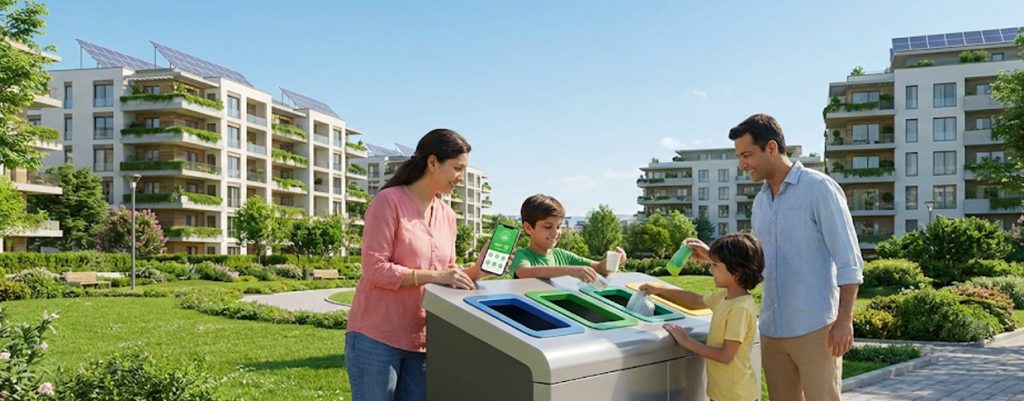
The rapid population growth in urban areas has made traditional garbage collection obsolete. As refuse production increases, forward-thinking municipalities are turning to intelligent infrastructure to maintain public health and protect the urban environment. At Mirrikh Infratech, we see firsthand how Dholera is pioneering a revolutionary waste management solution to attract global investors.
Integrated waste management within a smart city context involves the use of advanced digital technologies—such as IoT sensors, data analytics, and automated collection systems—to monitor, sort, and process waste efficiently. This approach streamlines waste collection and recycling and supports real-time decision-making, waste reduction, and resource recovery, making cities cleaner and more sustainable while appealing to global developers and investors.
Implementing proper Smart City Waste Management is no longer an optional luxury. It is a fundamental requirement for the sustainable development goals outlined by global financial institutions like the world bank. For investors looking at commercial and residential plots in 2026, understanding this hidden infrastructure is the key to measuring long-term property appreciation.
Why Smart City Waste Management is Crucial Today?
The Shift from Traditional Solid Materials Handling
Historically, solid waste management relied on static collection schedules that resulted in overflowing trash bins, noxious odors, and polluted streets. Today, handling municipal solid waste requires a much more proactive, technology-driven approach. Modern infrastructure leverages cutting-edge iot technologies and highly calibrated smart sensors to completely overhaul how refuse is processed and transported. This ensures that sustainable urban environments remain visually pristine and highly attractive to commercial real estate buyers.
Achieving True Ecological Harmony
A core pillar of Dholera’s master plan is minimizing negative environmental impact at every level of development. The municipal authority guarantees a better quality of life for all residents and workers by moving toward an automated model. Numerous global case studies prove that investing in a sustainable waste management system protects local ecosystems and waterways and significantly boosts regional property values over time.
Core Dholera Infrastructure Pillars
The execution and occupancy phase of the Dholera Special Investment Region (DSIR) began in 2026. This region is establishing national benchmarks for the construction of contemporary cities.
TP2 Activation Area and Underground utilities
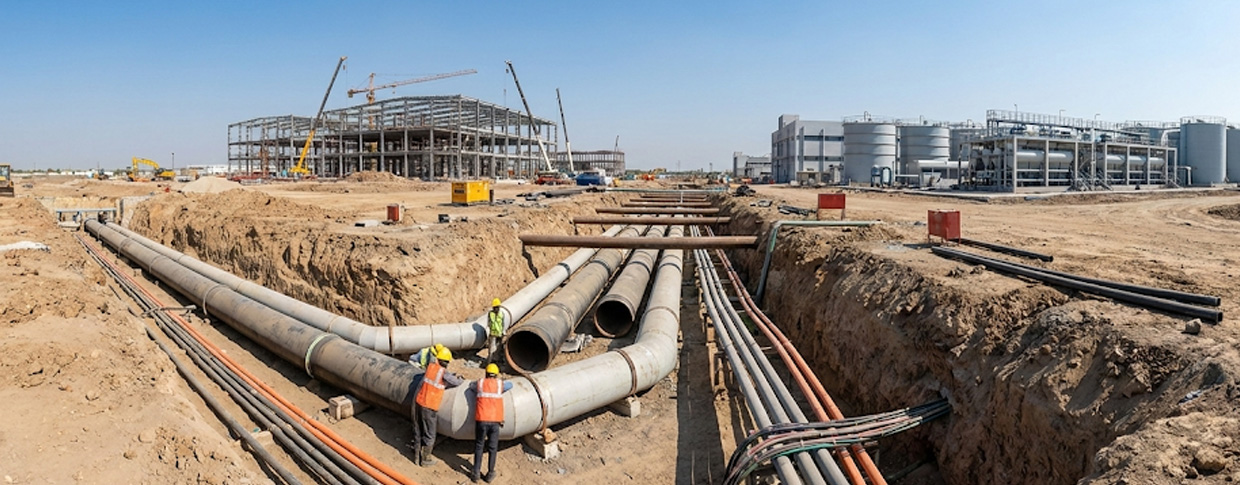
Phase 1 Activation Area completion (22.5 square kilometers) is a major milestone for real estate investors. Unlike older metropolitan areas that leave trash on the curb for pickup, Dholera has massive underground disposal networks. This means efficient waste management is built into street foundations. Underground water, electricity, and refuse pipelines protect residential and commercial areas from visual pollution.
Tata Electronics Semiconductor Fab Effluent Control
Handling specialized industrial byproducts is crucial as Tata Electronics invests Rs 1.18 lakh crore to build India’s first semiconductor fabrication plant in Dholera. The city processes hazardous waste safely with modern CETPs. Heavy manufacturing industries can operate smoothly without violating global ecological standards or polluting the local water table with this infrastructure.
International Dholera Airport
Set to begin initial cargo and passenger operations by mid-2026, the new Dholera International Airport will bring massive logistics traffic to the region. This global aviation hub generates various waste, necessitating highly scalable, smart waste management solutions. Dedicated recycling facilities at the airport will expedite the sorting, sanitization, and processing of commercial debris.
The Role of IoT Technologies and Smart Sensors
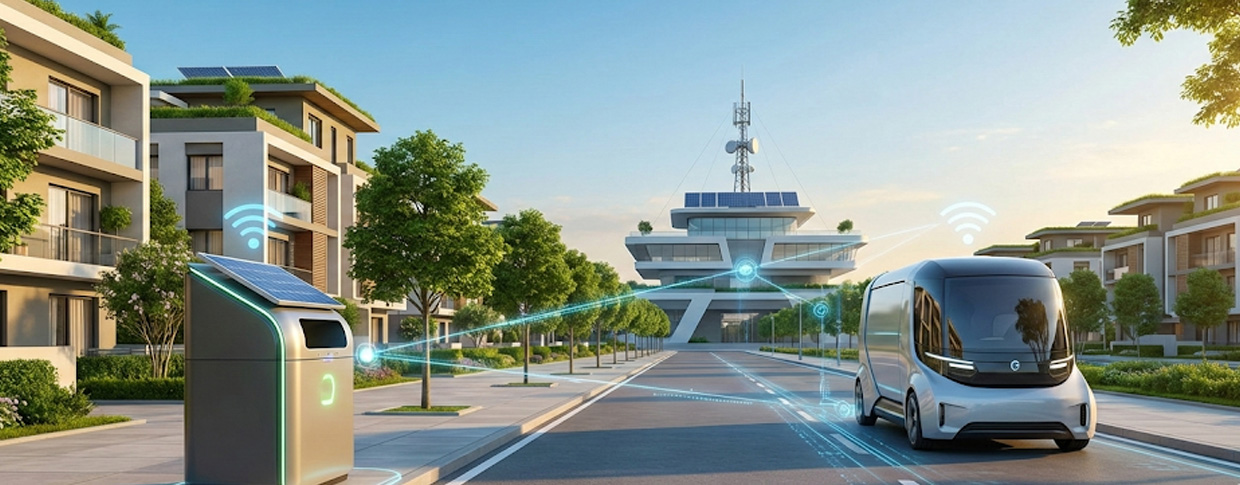
The true magic of Dholera’s infrastructure lies in its seamless digital connectivity. Unlike traditional metropolitan methods, the city uses an interconnected network of iot solutions to monitor refuse levels across the entire 920 square kilometer region.
Real-Time Data Collection
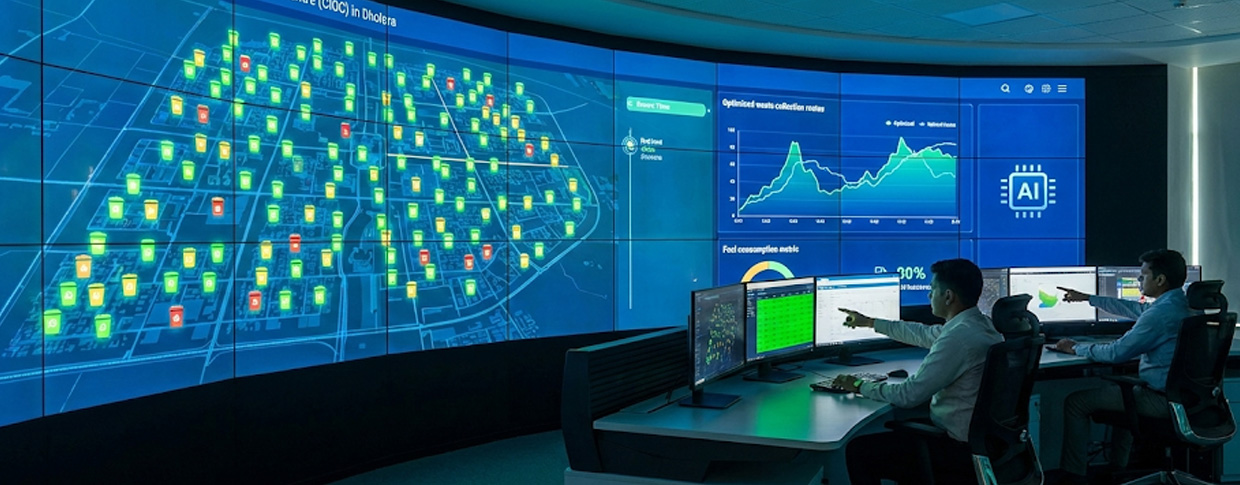
Advanced sensors are installed directly inside waste containers across the entire city grid. These highly durable devices monitor bin fill levels in real time and transmit continuous data collection back to the central City Integrated Operations Centre, famously known as the ABCD Building. This constant stream of telemetry ensures that municipal workers know exactly which bins need immediate attention long before they overflow into the streets.
Optimizing Collection Routes
Using this live telemetry data, the city’s command center deploys dynamic waste collection. Routing software calculates the most efficient waste collection routes for municipal trucks, ensuring that waste collectors only travel to locations that actually require service. This incredible operational efficiency drastically reduces fuel consumption for the entire municipal fleet, saving taxpayer money and extending the lifespan of the vehicles.
AI-Driven Analytics
To handle massive waste volumes from a booming population, the city leverages artificial intelligence and specialized machine learning protocols to predict future sanitation needs.
Machine Learning and Computer Vision in Sorting
Advanced computer vision cameras at automated sorting facilities help categorize different refuse streams rapidly. The system efficiently recovers valuable recyclables by identifying plastics, metals, paper, and organics on a conveyor belt. Analyzing these detailed refuse generation patterns allows city planners to deploy effective Smart City waste management strategies that adapt seamlessly to seasonal demographic changes or sudden spikes in industrial manufacturing growth.
Reducing Carbon Emissions and Greenhouse Gases
By optimizing broader collection routes throughout the various town planning zones, the city minimizes the time garbage trucks spend idling in traffic. This massive reduction in daily mileage directly lowers carbon emissions and localized greenhouse gas emissions, serving as a powerful municipal weapon against global climate change.
Overcoming Common Urban Infrastructure Hurdles
Building an intelligent city from scratch is a monumental task, and integrating modern technology comes with specific obstacles that urban developers must carefully navigate to achieve success.
What are cities’ smart waste management challenges?
Older municipalities face logistical challenges due to high initial capital costs and the difficulty of integrating modern sensors with decaying legacy infrastructure. Historic towns struggle to retrofit underground networks without destroying roads and businesses. Telemetry from connected devices poses strict cybersecurity risks for administrators.
Dholera, India’s first Platinum-rated greenfield development, avoided these retrofit issues. Dholera avoided costly construction disruptions that plague traditional metropolitan upgrades by integrating Smart City Waste Management into the city’s master architectural plan from the start.

Using Citizen Apps for Improved Public Health
Interactive mobile applications empower residents in modern developments like Dholera. These digital tools allow citizens to report broken bins, track their personal refuse footprint, and communicate directly with municipal sanitation authorities. This level of digital transparency fosters a collaborative, trusting urban environment where public health is fiercely protected by both the government sector and the local community.
Why Do Sustainable Utilities Drive Long-Term Value?
Smart City Waste Management greatly increases property value. Families want homes in neighborhoods without visual pollution or toxic odors, and multinational companies want headquarters in areas with efficient disposal logistics.
Dholera’s smart refuse management systems strictly control refuse production, setting a global standard for urban excellence. Mirrikh Infratech offers premium residential and industrial plots in India’s fastest-growing infrastructure hub. Secure your lucrative place in a cleaner, smarter tomorrow today!
What challenges do cities face when implementing smart city waste management systems?
Cities often face high initial capital costs to install underground infrastructure and sensors. Additionally, integrating new AI software with legacy systems and ensuring continuous maintenance can be challenging for older municipalities. Fortunately, as a greenfield city, Dholera was built from scratch, bypassing these retrofit challenges.
What are the current best practices for smart city waste management?
Modern strategies that use digital automation and predictive analytics work best. Current best practices require municipalities to abandon calendar-based collection schedules. Instead, top companies like Dholera use ultrasonic sensors in disposal units to monitor capacity in real time using an IoT framework. This telemetry is fed into centralized AI platforms that dynamically optimize sanitation fleet routing to ensure vehicles only travel when necessary. Integrating citizen-facing mobile apps to encourage proper segregation at the source is now a best practice because it greatly improves recyclable material purity before it reaches treatment plants.