
In India’s quest for next-generation urban development, the idea of Digital Twin Dholera represents a revolutionary advance. In Gujarat’s Dholera Special Investment Region (DSIR), digital twin technology is bridging the gap between the virtual and real worlds, enhancing performance, planning & forecasting.
This innovation creates a dynamic digital model that keeps learning from data gathered across the city moving past just generating a 3D map of the infrastructure. Dholera is changing the game in energy use, city planning and managing environmental impacts by leveraging artificial intelligence, machine learning, edge computing and predictive analytics.
Including the digital twin Dholera technology is an example of how India is putting itself at the forefront of the adoption of smart city digital twins, guaranteeing growth that is data-driven, human-centered & sustainable.
Understanding the Smart City Digital Twin
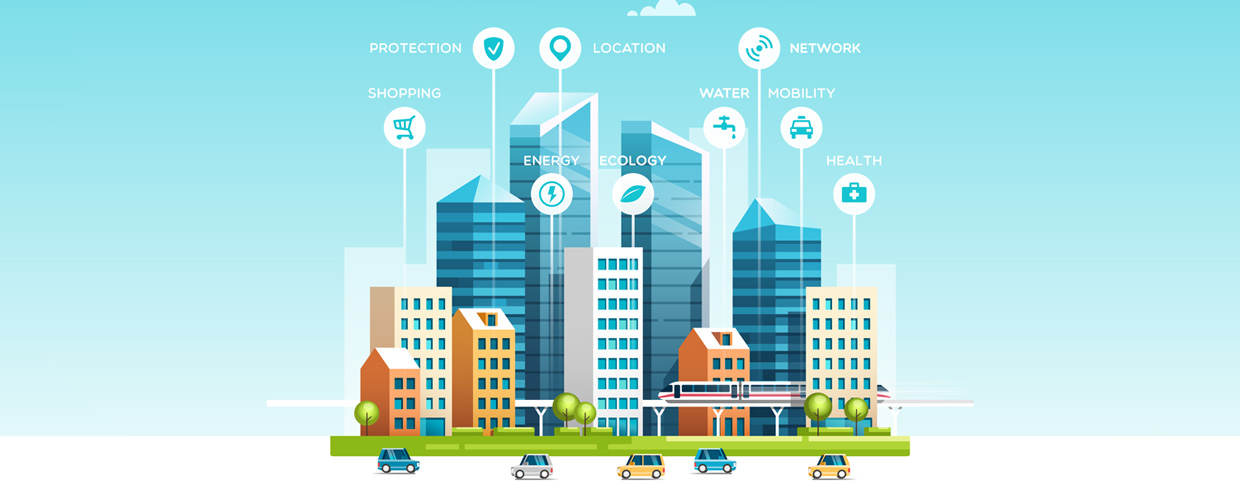
A digital twin of a smart city is a digital representation of its physical resources and operations that is updated in real time using environmental data, satellite imagery & networked IoT sensors. These digital twins replicate Dholera’s vital systems, including its water supply, power grids, traffic patterns & public services.
Urban planners can visualize, analyze & forecast city behavior with the aid of a network of data sources created by each sensor, which transmits real-time information about environmental conditions, energy consumption & air quality. Decision-makers can improve sustainability, lower operating costs & optimize designs thanks to this real-time connectivity.
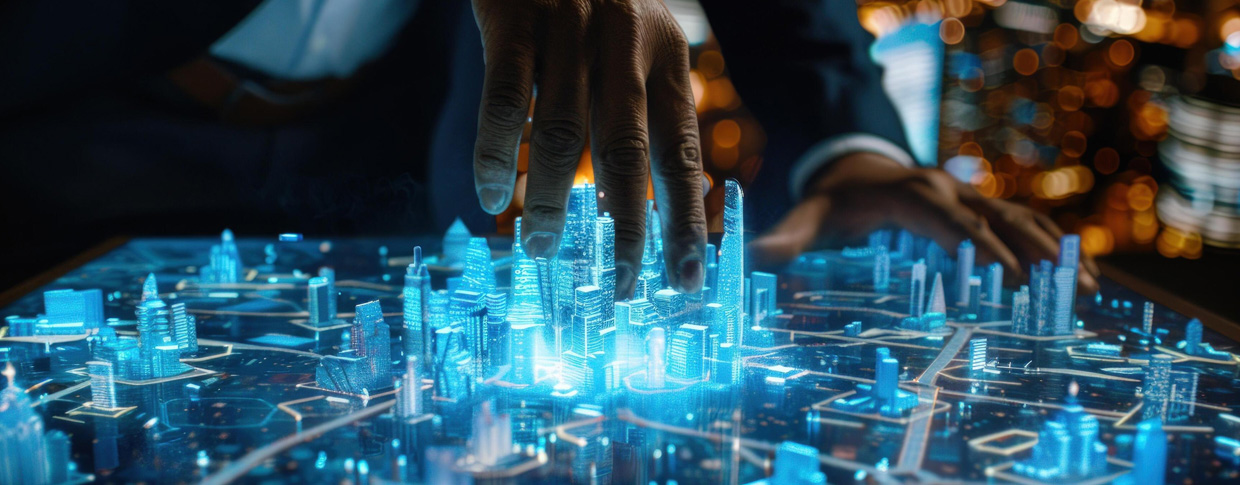
Dholera’s Vision: India’s First Smart Digital Twin City
Dholera Smart City project, part of the Delhi-Mumbai Industrial Corridor is set to showcase some impressive innovation. Dholera wants to be the leader in digital connectivity, urban intelligence & climate resilience by working with international tech companies and bringing in investments like Tata Electronics.
Digital twins bring together people from the public sector, private businesses, and citizens to work together to make the city smarter and more flexible. They act like the city’s data-driven nervous system.
Using the Digital Twin Dholera model to simulate development scenarios, predict population growth & measure environmental impact can help authorities make sure that growth happens in a smart and responsible way.
The Digital Twin of the City
The city’s digital twin is a dynamic data-driven ecosystem that constantly incorporates sensor data and updates its virtual counterpart. Every element of Dholera’s physical landscape, including public utilities, new construction & transit corridors, is replicated in the virtual environment.
With this method, city planners can quickly evaluate design options and predict how any changes to infrastructure will affect the city before they happen. As Dholera grows, the twin gives us useful information about how the weather, people’s actions, waste management, water supply systems & energy use all work together.
Powering Real-Time Decision-Making
Core of Digital Twin Dholera is edge computing which locally processes massive volumes of sensor-generated data. Instead of transmitting all data to distant cloud servers, the city’s edge nodes analyze data closer to its source.
Lightning-fast real-time responsiveness is guaranteed for critical systems like public safety cameras, traffic lights and power grids. In the event of grid overload or congestion edge devices automatically adjust operations to maintain operational efficiency while reducing latency and network load.
This type of decentralization is necessary to manage enormous amounts of data, especially in a growing smart city ecosystem like Dholera.
Building Information Modeling (BIM)
Foundation for creating the digital twin Dholera’s infrastructure is Building Information Modeling (BIM). BIM creates accurate 3D models by merging engineering, architectural & environmental data.
When combined with IoT and AI, BIM models are the building blocks of Dholera’s Data-driven world. They let the twin accurately copy real things like new buildings, bridges, and roads. This synergy supports long-term climate change adaptation, makes predictive maintenance easier & improves data accuracy.
It guarantees Dholera’s expansion stays well-structured, effective & aesthetically pleasing throughout every stage of the project.
Holographic Technology in Dholera’s Smart City Planning
Holographic technology is another cutting-edge part of Dholera’s planning ecosystem. Engineers and regular people can use advanced virtual reality (VR) & augmented reality (AR) tools to see projects before they start building.
Planners can use holographic visualization to look at the environmental impact, look into public sector projects in three dimensions, and try out different designs in a virtual environment. By combining real-time data, BIM models and AI-powered simulation, Dholera’s planners can create immersive experiences that make it easier for people to get involved and see how decisions are made.
Digital Twin Dholera’s Strategy for Infrastructure and Governance
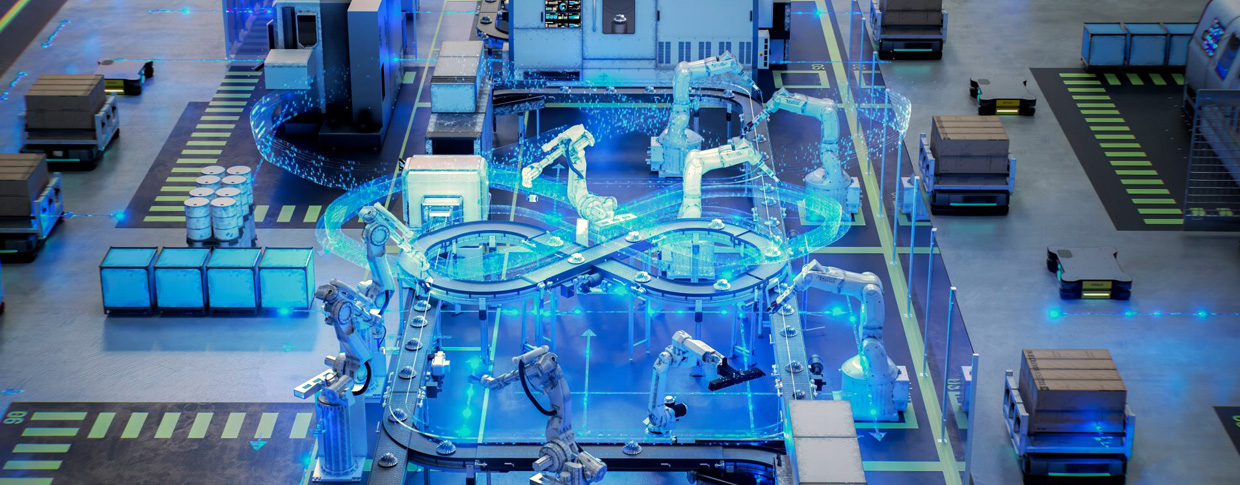
Dholera prioritizes inclusivity, scalability & interoperability in their Data-driven twin strategy. The Data-driven twin framework incorporates all essential infrastructure systems, including waste management, water supply, power grids & transportation networks.
Predictive modeling and ongoing data analysis are made possible by this strategy, which maximizes operational effectiveness. Additionally, Dholera’s data will eventually be able to seamlessly integrate with other city twins throughout the nation, supporting a single national data ecosystem for sustainable urban development, thanks to its close alignment with India’s National Digital Twin initiative.
Data Collection and Predictive Analytics
Digital twin Dholera’s unparalleled capacity to collect, evaluate & convert data into useful insights is what gives it its power. Authorities can keep an eye on environmental data, infrastructure health & citizen mobility with the help of ongoing data collection from IoT sensors, drones & satellite imagery.
The system uses predictive analytics to identify trends, predict changes in demand & optimize city operations. Machine learning models, for example, can predict spikes in energy use during peak hours, allowing for proactive adjustments to preserve stability. These insightful observations not only lower operating expenses but also raise inhabitants’ standard of living in general.
Environmental Monitoring and Climate Resilience
The core of Dholera Smart City continues to be environmental sustainability. The Data-driven twin continuously monitors environmental conditions, trends in climate change & air quality in different zones.
Authorities can identify the sources of pollution, evaluate the quality of the water & analyze trends in energy use by using sensor data and satellite imagery. These insights facilitate real-time interventions to maintain healthy air quality and lower carbon emissions, such as rerouting traffic or modifying the timing of traffic lights.
By leveraging predictive analytics, Dholera ensures that its rapid growth doesn’t compromise environmental protection.
Public Safety, Mobility & Real-Time Responses
One characteristic that sets a successful smart city digital twin apart is safety. To handle crises and improve public services, Dholera’s digital ecosystem combines artificial intelligence (AI), edge computing & real-time sensors.
Emergency personnel can use 3D Data-driven models of the impacted areas to safely navigate and efficiently deploy resources in the event of a fire or flood. By predicting possible hazards based on sensor data, predictive systems assist authorities in creating backup plans before emergencies arise.
Digital Twin in the Tata Electronics Ecosystem
One of the most cutting-edge instances of digital twin technology in operation is the semiconductor plant owned by Tata Electronics. The twin of this smart factory keeps an eye on all operational levels, including energy management and supply chain logistics.
The system guarantees predictive maintenance, lowers energy consumption & improves product quality by instantly analyzing vast volumes of data. As a result, Dholera’s broader smart city framework is perfectly complemented by a sustainable manufacturing ecosystem.
Comparing Dholera and GIFT City’s Smart City Development
Although they have different areas of focus, Dholera and GIFT City are both leading smart city models in Gujarat. Dholera’s digital twin is focused on environmental intelligence, industrial efficiency & urban resilience, whereas GIFT City prioritizes financial services and upscale business infrastructure.
A more comprehensive approach to smart city management is offered by Dholera’s integration of AI, IoT & digital twins across public services and urban planning. It is intended to promote long-term sustainability and the welfare of citizens in addition to economic growth.
Sustainable Urban Development and Resource Optimization
Dholera’s responsible growth is guaranteed by the use of Data-driven twin technology. Every element of city life is examined for ongoing improvement, from tracking public participation through mobile apps to keeping an eye on waste management and energy consumption.
Before making changes in the real world, Dholera’s administrators can test the results virtually by simulating various urban planning scenarios. This method conserves resources, improves operational effectiveness & encourages environmentally conscious and technologically balanced sustainable urban development.
Real Estate, Population Growth & Planning Insights
Digital twin models are used in the real estate industry to forecast infrastructure demand, manage population growth & visualize future developments. By evaluating how new construction will affect traffic, utilities & environmental data, developers can make sure that their projects complement Dholera’s smart city objectives.
This data-driven strategy improves transparency and makes it possible for investors and the public sector to work together to strategically shape the city’s growth.
Challenges and Future Outlook
Digital twin Dholera still has issues with data interoperability, cybersecurity & privacy protection despite its revolutionary advancements. Strong governance and standardization frameworks are necessary to manage the massive flow of urban data.
Nevertheless, these obstacles should be overcome by continuing developments in cloud-edge collaboration, blockchain-based data security & AI-driven analytics. Dholera’s model, which blends innovation and inclusivity, may soon be used as a model for smart cities around the world.
What is driving the semiconductor revolution in Dholera Smart City?
Digital twin The semiconductor boom in the area is being driven by Dholera technology. Using IoT sensors, AI-based monitoring & predictive analytics, the ₹500 crore Inox Air Products facility will provide ultra-pure gases for chip manufacturing. Accurate environmental impact tracking, reduced emissions & efficient energy use are all guaranteed by real-time data collection.
Engineers forecast maintenance and optimize layouts using BIM modeling and virtual simulations. This combination of Data-driven connectivity and machine learning illustrates how Dholera combines sustainability and technology. It establishes a global standard for the use of digital twins in smart cities and strengthens India’s semiconductor ecosystem. Dholera is therefore a pioneer in environmentally friendly industrial and urban growth.
How does this semiconductor hub support Dholera’s digital twin strategy?
In the Digital Twin Dholera framework, the semiconductor hub located within the Dholera Special Investment Region is crucial. Every element is connected to a Data-driven model that replicates performance in the real world, from water systems to power grids. Engineers forecast maintenance and lower operating costs by analyzing vast amounts of data using edge computing, machine learning & sensor data.
Process promotes sustainable urban development, increases safety & improves energy efficiency. Dholera sets new benchmarks for intelligent infrastructure in India by fusing environmental data, AI analytics & industrial operations to show how smart industries can prosper in a real-time, data-driven ecosystem.
What’s the latest progress on Dholera International Airport’s development?
As part of the Digital twin Dholera vision, the Dholera International Airport is moving closer to completion in 2025. The airport’s digital model, which is equipped with AI-based systems, IoT-enabled controls & predictive analytics, enables planners to model energy consumption, traffic flow & air quality. Sustainability, waste management & effective operations are guaranteed by this integration.
Through real-time data dashboards, the project also communicates with urban planners, enhancing resource management and public services. Once the airport is up and running, it will boost economic growth and Data-driven connectivity, turning Dholera into a global hub for smart aviation and reaffirming Gujarat’s position as a leader in the development of smart infrastructure.
What is the primary objective or goal of using a digital twin in the planning and development of Dholera Smart City?
The primary objective is to achieve sustainability and enhanced decision-making by facilitating efficient resource management and disaster management. The Data-driven twin creates virtual models of urban systems (like water/energy distribution and infrastructure to allow for.
-
Digital twin Dholera enables real-time monitoring of resource use and quickly identifies inefficiencies.
-
Digital twin Dholera simulates disasters like floods or earthquakes to plan strong contingency measures.
-
Digital twin Dholera provides real-time data for faster, smarter & more resilient city responses.
Conclusion: The Future of Digital Twin Dholera
Digital twin Dholera embodies the future of smart city digital twin innovation. By merging data-driven intelligence, predictive analytics & citizen engagement, Dholera is building not only infrastructure but a responsive ecosystem that evolves with its people.
From real-time data to climate-conscious planning, Dholera represents how technology can harmonize urban life, sustainability & economic opportunity. As it continues to expand, Dholera will inspire other cities — in India and beyond — to adopt Data-driven twin technology as the foundation of modern governance and growth.