

Saving money is one thing. Making that money grow is another. If you’re planning your next financial move, chances are you’ve come across the question of FD vs land investment. Both have been trusted by Indian investors for years, yet they work in completely different ways. When it comes to liquidity, fixed deposits are generally more liquid than land investment, as FDs allow you to access your funds quickly upon maturity or, in many cases, even with a small penalty for early withdrawal. In contrast, land investment can take time to sell and convert into cash, making it a less liquid option.
If you’re planning your next financial move, chances are you’ve come across the question of FD vs land investment. Both have been trusted by Indian investors for years, yet they work in completely different ways.
A fixed deposit offers stability. You know the return you’ll receive before your money is invested. Land doesn’t come with that certainty, but it offers something many investors look for: the possibility of long-term appreciation.
That doesn’t automatically make one better than the other.
The right choice depends on your financial goals, your risk tolerance, how long you plan to stay invested, and whether you value predictable returns or long-term growth.
Instead of looking for a winner, it’s more useful to understand where each option performs well and where it may not.
Which Is Better: FD vs land investment?
There is no single answer to the FD vs land investment debate. Fixed deposits are ideal for investors seeking stability and guaranteed returns, while Real Estate is often considered by people looking for long-term growth and wealth creation through real estate. The better option depends on your financial goals, liquidity needs, and investment horizon.
Why Do Investors Still Prefer Fixed Deposits?
Despite so many new investment options becoming available, the fixed deposit continues to be one of the most popular choices in India.
The reason is simple.
An FD is easy to understand. You invest a sum of money, the bank offers a predetermined fixed interest rate, and your money grows without being affected by daily market fluctuations.
For people who don’t want surprises, that predictability has real value.
Many investors use FDs to build emergency funds, save for a child’s education, or set aside retirement savings where preserving capital matters more than chasing the highest return.
How Does a Fixed Deposit Work?
When you open a fixed deposit account, you invest a principal amount for a fixed period.
The bank calculates your interest income using the agreed fd interest rate, and at maturity you receive both your deposit and the accumulated interest amount.
Many investors use an fd calculator before investing to estimate how much they’ll receive at the end of the tenure.
Since the return is fixed, there is very little uncertainty throughout the investment period.
What Makes Fixed Deposits a Reliable Choice?
One of the biggest strengths of a fixed deposit is stability.
Unlike investments linked to the stock market, FD returns don’t change because of market volatility or changing investor sentiment.
Eligible deposits are also protected by the Deposit Insurance and Credit Guarantee Corporation, which operates under the regulatory framework of the Reserve Bank of India.
This additional layer of protection is one reason many senior citizens and conservative investors continue to choose bank FDs.
Another advantage is convenience.
There is no need to monitor prices, manage property, or track market trends. Once the deposit is made, it continues to earn interest until maturity.
Where Fixed Deposits Have Limitations
Every investment has trade-offs, and FDs are no exception.
The biggest challenge is inflation.
While your money earns interest, rising prices can gradually reduce its purchasing power. Over a long period, inflation may grow faster than the return generated by some fixed deposit interest rates.
Liquidity is another factor to consider.
Although banks allow premature withdrawals, doing so usually reduces the applicable fd rate or results in a small penalty.
These limitations don’t make FDs a poor investment. They simply highlight that they work best for certain financial goals rather than every situation.
Understanding Land as an Investment
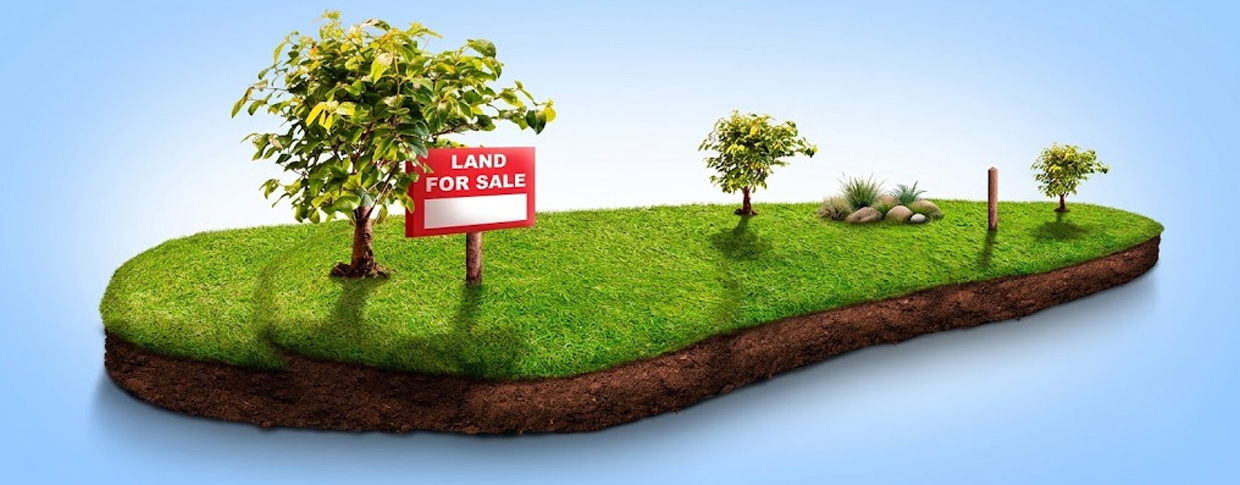
Unlike a fixed deposit, land is a physical asset.
Its value isn’t fixed on the day you buy it. Instead, it changes over time based on market conditions, infrastructure development, demand, and the overall performance of the real estate market.
This uncertainty is exactly why opinions about land vary so much.
Some investors avoid it because returns aren’t guaranteed.
Others see that uncertainty as an opportunity, especially when buying in locations expected to develop over the coming years.
Why Do Many Investors Consider Real Estate?
People don’t buy land simply because they expect prices to rise overnight.
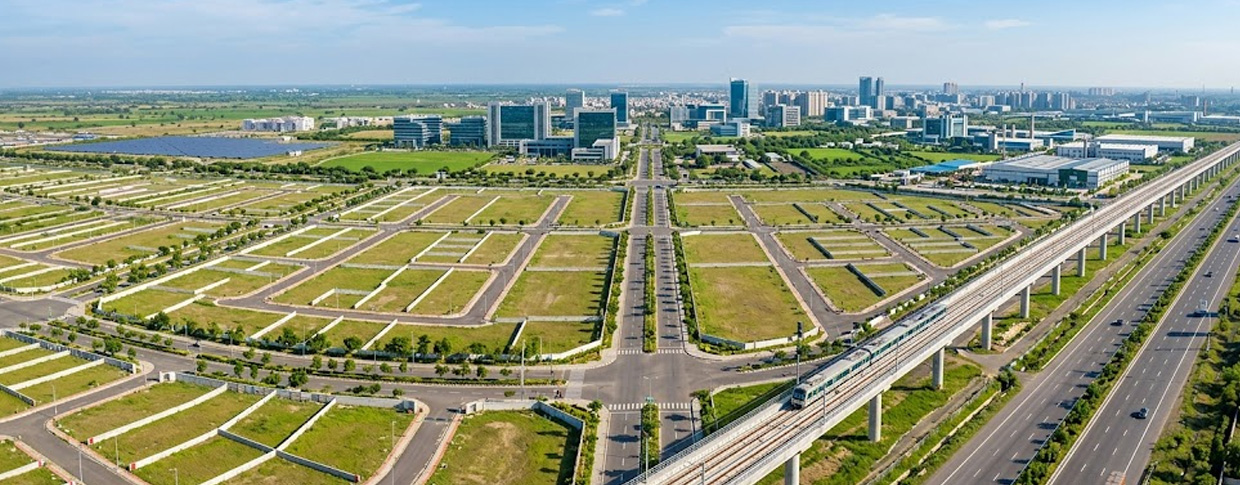
They buy it because land is limited, while cities continue to expand.
As roads, industries, transport networks, and commercial activity grow around a location, property values may increase as well. That’s one of the reasons real estate investments have remained popular for long-term investors.
Of course, not every property performs the same way.
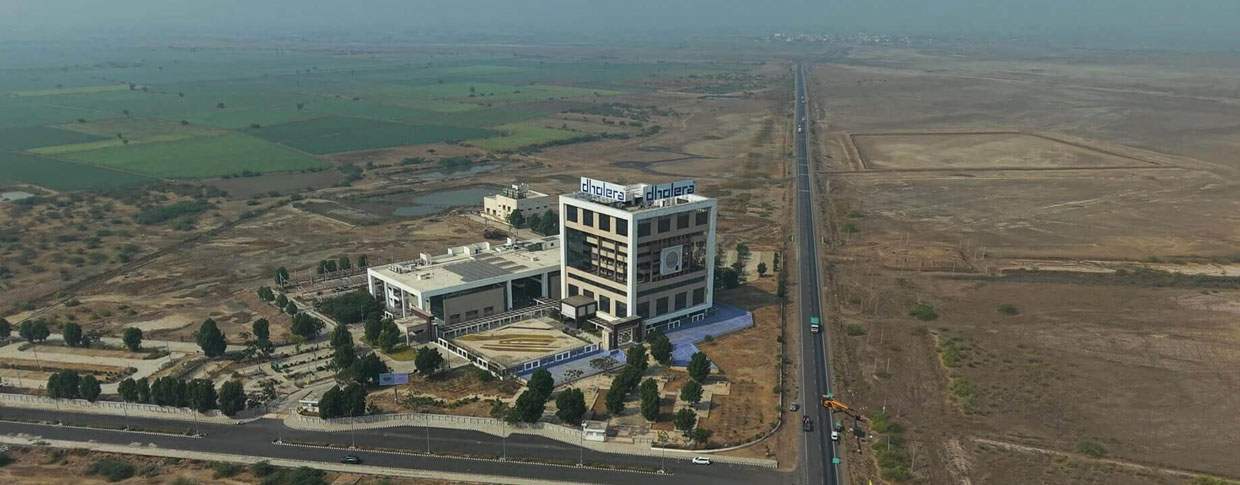
For example, emerging infrastructure-driven regions such as Dholera Smart City have attracted attention from long-term investors because of planned industrial development, improved connectivity, and future growth potential. However, as with any real estate investment, location research and due diligence remain essential before making a purchase.
Wealth creation through real estate
One reason the discussion around FD vs land investment continues is that both investments aim to grow wealth in very different ways.
An FD focuses on preserving your capital and generating predictable returns. Real Estate focuses on appreciation.
A well-located property may increase in value as surrounding infrastructure develops, creating opportunities for capital appreciation over the long term. That’s why many investors associate carefully selected property with wealth creation through real estate.
The important point is that appreciation isn’t guaranteed.
Choosing the right location and having a long investment horizon are often just as important as the investment itself.

FD vs Land Investment: Comparing Returns
Returns are usually the first thing investors compare. With a fixed deposit, the outcome is straightforward. The return depends on the agreed rate of interest, and you’ll know exactly what you’ll receive when the deposit matures. Real Estate works differently.
Markets such as Dholera Smart City illustrate how government-backed infrastructure projects can influence property values over time. While appreciation is never guaranteed, infrastructure development often plays a key role in long-term real estate performance.
That’s why comparing FD vs land investment isn’t simply about asking which one gives a higher return.
It’s about understanding whether you prefer certainty or growth potential.
How Inflation Influences Your Investment
Inflation quietly affects every investment.
Even if your savings are growing, rising prices can reduce what that money is actually able to buy in the future.
This is why many investors don’t look only at annual returns.
They also consider whether an investment is likely to preserve purchasing power over the long term.
Historically, Real Estate has often been viewed as an asset that may keep pace with inflation because property prices tend to move alongside economic development. Fixed deposits, meanwhile, continue to offer stability and predictable returns, making them suitable for investors who prioritise safety over growth.
Is Land Investment More Liquid Than Fixed Deposits?
If quick access to your money is important, fixed deposits generally have the advantage.
Banks usually allow early withdrawal, although premature withdrawals may reduce your final return.
Real Estate transactions take longer because they involve finding a buyer, completing documentation, and transferring ownership.
For investors who expect they might need funds at short notice, this difference in liquidity is worth considering before deciding between FD vs land investment.
Does an FD Offer More Safety Than Land Investment?
If safety is your top priority, fixed deposits generally have the upper hand.
Money kept in eligible bank FDs is protected under the Deposit Insurance and Credit Guarantee Corporation (DICGC), which operates under the guidelines of the Reserve Bank of India. This gives investors confidence that their deposits are protected up to the prescribed limit, even if a bank faces financial difficulties.
Land is different. It’s a tangible asset whose value depends on several factors, including location, infrastructure, demand, and future development. While those factors can create opportunities for growth, they also introduce uncertainty.
That’s why many investors choose FDs for capital protection and land for long-term wealth building instead of treating them as competing investments.
Can Land Generate Regular Income Like an FD?
A fixed deposit offers regular interest income, with many banks providing monthly or quarterly payouts, making them ideal for retirees seeking steady income. In contrast, land typically does not generate income unless leased, making FDs preferable for predictable earnings while land is favored for long-term appreciation.
Are There Tax Benefits When Choosing Land Over FDs?
Taxes can greatly affect your actual returns.
Interest from fixed deposits is taxable based on your income slab, while land taxation varies with the holding period and capital gains. Always consult a tax professional for major financial decisions.
How Does the Investment Amount Affect Your Choice?
Your investment amount significantly influences your choice.
Fixed deposits require less capital and are easily accessible, while land purchases demand a larger upfront investment along with additional costs like stamp duty and legal fees.
Choosing Between FD and Land Based on Your Financial Goals
The ideal investment aligns with your financial goals, whether it’s fixed deposits for stability or land for long-term growth. Financial planning often involves multiple solutions tailored to different objectives.
Common Mistakes Investors Should Avoid
Chasing the highest FD interest or buying real estate based on recommendations without due diligence are common pitfalls.
Investors should diversify their portfolios to manage risk effectively and take time to compare options for better decision-making.
How Do Other Investment Options Compare?
Investors have various options beyond FD and land, including mutual funds, corporate bonds, gold, and equities, each with unique risk and return profiles. The ideal mix depends on your financial goals, risk tolerance, and investment horizon.
Why Diversification Often Works Better
Investors often wonder if they should pick just one option, but many diversify their investments. FDs offer stability and predictable returns, while real estate provides long-term growth potential, allowing for flexibility as financial needs evolve.
Final Verdict
The discussion around FD vs land investment isn’t about finding a winner.
Both investments have stood the test of time because they meet different financial needs.
A fixed deposit is difficult to beat when safety, predictable returns, and capital protection are your priorities. It’s simple, low-maintenance, and suitable for investors who value certainty.
Land, on the other hand, offers something different. Investors who are exploring emerging growth corridors often research destinations such as Dholera Smart City because of their planned infrastructure and long-term development vision. Like any investment, decisions should always be based on careful research, legal verification, and personal financial goals rather than expectations of guaranteed returns.
Ultimately, better choice depends on your financial goals, investment horizon, liquidity needs, and comfort with risk. For many people, a combination of both investments creates a balanced financial strategy that offers stability today while leaving room for future growth.
FAQ: FD vs land investment
- Which is better, FD vs land investment?
It depends on your goals. Fixed deposits are generally preferred for stability and predictable returns, while land is often chosen by investors looking for long-term appreciation. - Is land investment more liquid than fixed deposits?
No. Fixed deposits usually provide better liquidity because they can often be withdrawn before maturity, while selling land typically takes more time. - Can land generate higher returns than an FD?
It can, especially when purchased in locations with strong long-term development potential. However, unlike FDs, returns from land are not guaranteed. - Is land investment riskier than fixed deposits?
Generally, yes. Land values depend on location, infrastructure development, and market demand, whereas fixed deposits offer more predictable outcomes. - Should I invest only in FDs or only in land?
Not necessarily. Many financial planners recommend balancing different investments based on your financial goals, risk tolerance, and investment horizon instead of relying entirely on one asset.