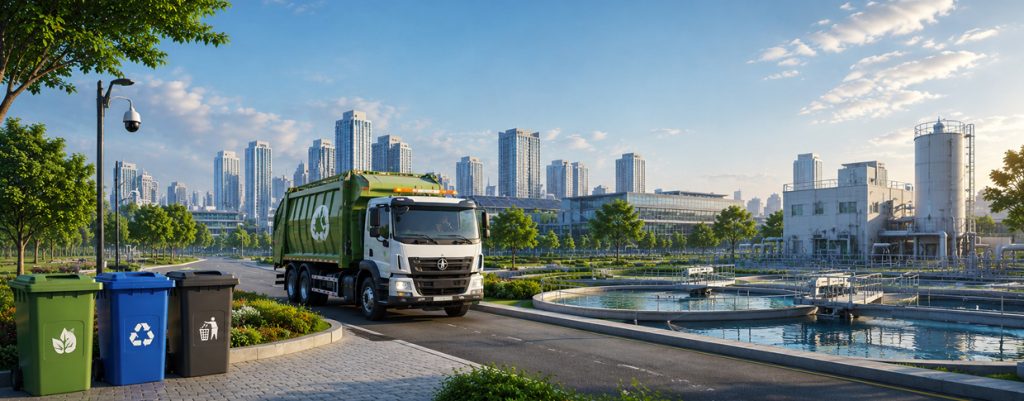
Waste management is one of the most critical challenges facing rapidly growing urban centers across India. As cities expand, the volume of household, commercial, and industrial refuse grows exponentially, often outpacing the infrastructure designed to handle it. Dholera Smart City, developed under the Dholera Special Investment Region (DSIR) in the state of Gujarat, is taking a fundamentally different approach. Built from the ground up with sustainability at its core, waste management in Dholera is integrated into the master plan rather than retrofitted after the fact.
This forward-thinking approach positions Dholera as a benchmark for smart waste management in India, combining advanced technologies, smart monitoring systems, and strong governance to create a cleaner, healthier urban environment.
How does Dholera’s smart waste management system work?
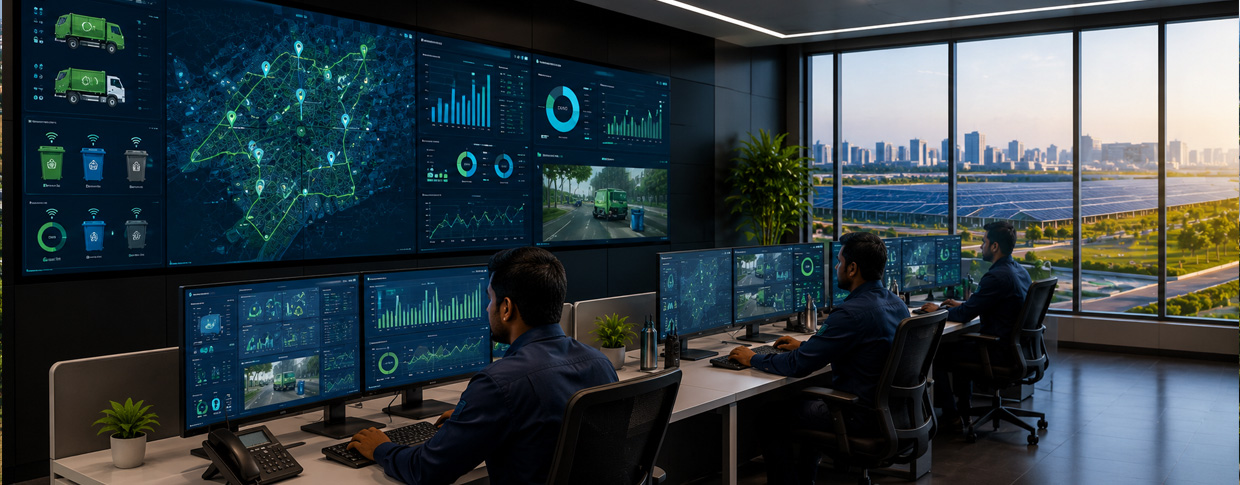
Dholera’s smart waste management system relies on IoT devices, advanced sensors, and centralized data analytics to monitor refuse generation and collection in real time. Smart bins signal pickup needs, optimized routes cut fuel use, and the Dholera Municipal Corporation oversees segregation, treatment, and disposal across residential and industrial zones citywide.
Key Features of Dholera’s Approach to Refuse Handling
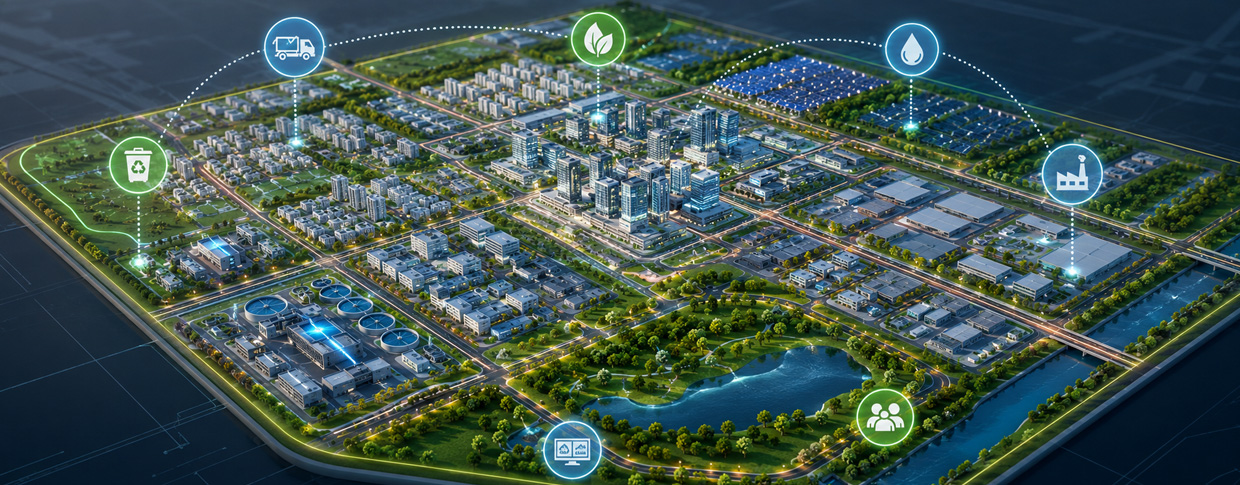
DSIR’s approach is built on integrated infrastructure planning rather than isolated fixes. From day one, the master plan allocated dedicated zones for treatment facilities, ensuring solid waste management systems scale alongside population growth, supporting waste management in Dholera as the population expands.
Smart Monitoring Systems and IoT for Collection
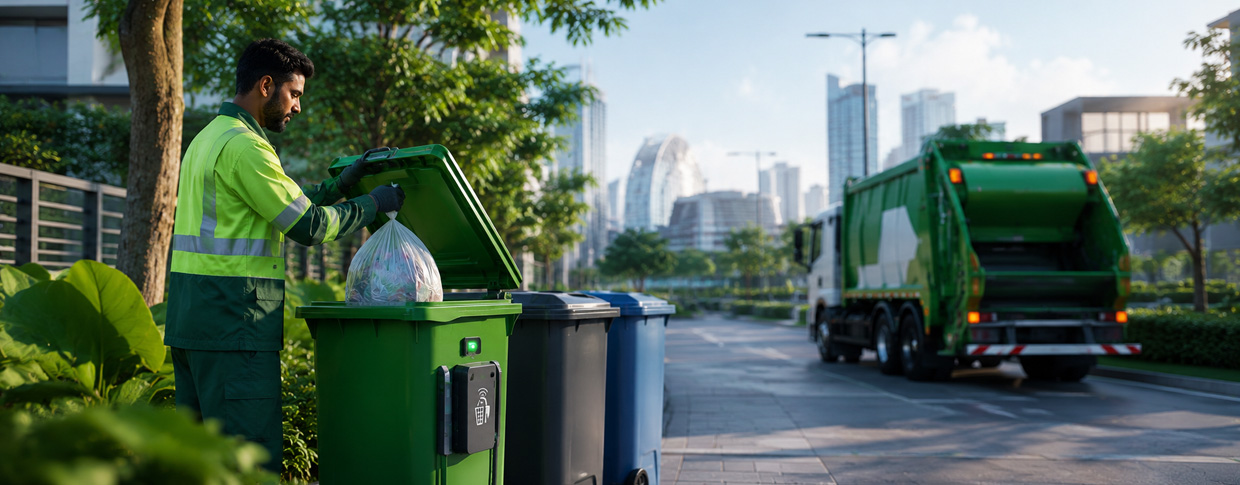
Smart monitoring systems form the backbone of DSIR’s refuse handling strategy. IoT devices fitted to collection bins and vehicles track fill levels and real-time location data, feeding information into a centralized dashboard. Mobile apps allow residents and municipal staff to report issues, track schedules, and access updates—reducing overflow incidents and improving efficiency across the urban environment.
Source Segregation
Segregation is mandatory at the source in DSIR Smart City. Households and commercial establishments must separate organic, recyclable, and non-recyclable refuse using a color-coded system. This simplifies downstream processing, increases recycling rates, and reduces the volume that ultimately reaches the landfill—a key component of any smart city committed to sustainability.
STP and CETP in Dholera’s Waste Management
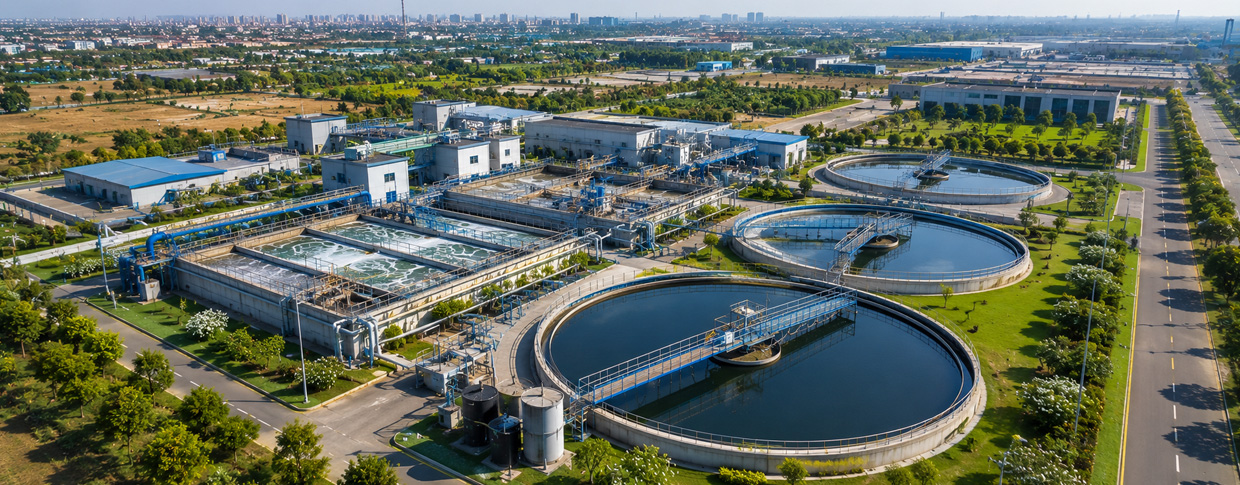
Sewage Treatment Plants (STP) and Common Effluent Treatment Plants (CETP) are central to waste management in Dholera. The STP handles domestic sewage from residential and commercial zones, treating wastewater to standards safe for reuse in irrigation and non-potable applications. The CETP, meanwhile, is dedicated to treating effluents generated by industries operating within Dholera Industrial City.
Preventing River Pollution
One of the most significant environmental risks in unplanned industrial zones is untreated effluent discharge into nearby water bodies. Dholera’s CETP infrastructure ensures industrial wastewater is treated to regulatory standards before release, directly protecting local rivers and groundwater from contamination linked to fossil fuels, chemicals, and industrial byproducts—a major differentiator compared to older industrial belts near Ahmedabad and Delhi.
What Makes Dholera Different from Other Indian Cities?
Unlike most Indian cities, where refuse infrastructure was added decades after urban development began, DSIR integrated these systems into its urban planning from the start. This means treatment plants, collection routes, and smart grids were designed together, covering square kilometers of planned development without the retrofitting challenges that plague legacy cities. This is part of what makes waste management in Dholera a genuinely different model.
Smart Waste Management in India
DSIR showcases how advanced technologies can transform urban development. Beyond collection and treatment, the city integrates waste-to-energy concepts, automated sorting facilities, and digital tracking—setting best practices that other Indian cities developing under smart city missions are beginning to study and replicate. This is a clear example of smart waste management in India in action.
Data Analytics, Sensors, and Real-Time Monitoring
Data analytics platforms aggregate information from sensors placed throughout the city’s refuse infrastructure. This real-time visibility helps the Dholera Municipal Corporation predict collection demand, identify inefficiencies, and adjust operations dynamically—an approach far more responsive than traditional fixed-schedule collection models used in most Indian municipalities.
Municipal Corporation’s Role in Waste Management in Dholera, Gujarat (Governance)
The Dholera Municipal Corporation, operating under the broader DSIR governance framework, is responsible for policy enforcement, infrastructure maintenance, and coordination between residential, commercial, and industrial refuse streams. This centralized governance model ensures consistency across the part of DSIR developed so far, with standardized protocols applied uniformly as future growth continues across the wider region.
Cutting Carbon and Emissions
Effective handling of refuse directly reduces greenhouse gas emissions and carbon emissions associated with landfill decomposition and transport. By minimizing landfill dependency through segregation and treatment, Dholera lowers its carbon footprint significantly compared to cities relying on open dumping. This contributes to better air quality and supports the broader goal of reducing reliance on fossil fuels across the urban environment, reinforcing why waste management in Dholera matters for the region’s long-term environmental health.
Dholera’s Sustainability Goals
Effective handling of refuse is not an isolated function in Dholera—it directly supports the city’s vision as a future city built on sustainability. Clean, efficient systems protect green spaces, maintain water supply quality, and contribute to an overall quality of life that global investors and residents alike consider when evaluating commercial real estate and residential plots across the region.
Smart Grids and Connectivity
Connectivity between refuse infrastructure and Dholera’s broader smart grids allows for synchronized operations—for example, waste-to-energy facilities feeding power back into the grid using renewable energy sources. This level of connectivity is rarely seen in Indian cities and represents a key advantage of Dholera’s integrated master plan, further strengthening smart waste management in India as a concept worth replicating elsewhere.
Future Plans
As the Dholera Smart City Project progresses toward completion, refuse infrastructure will continue to expand alongside residential and industrial development. Plans include broader adoption of electric vehicles for collection fleets, expanded smart monitoring coverage, and integration with the Dholera International Airport zone as that area develops. Additional treatment capacity is also planned to keep pace with population growth, ensuring that future growth across Dholera does not come at the cost of environmental standards. Officials have indicated that pilot programs for automated sorting facilities may be expanded to additional residential sectors over the coming years, further reinforcing the role of technology in everyday operations.
Impact on Property Value and Real Estate
For global investors and homebuyers evaluating residential plots and commercial real estate in Dholera, robust refuse infrastructure is a meaningful factor in long-term property value. Clean surroundings, reliable water supply, and good air quality—all supported by effective systems—are increasingly important considerations for those exploring opportunities within India’s economic growth corridors. As Mirrikh Group continues to track developments across Dholera, waste management in Dholera remains one of the foundational systems underpinning the region’s livability and long-term investment appeal for buyers researching the broader Dholera smart city landscape.
What are the Challenges of Building a Smart City?
Building a smart city like Dholera faces several challenges, including integrating advanced technology with existing infrastructure, ensuring data privacy and security, and managing the complexities of waste management. Additionally, securing funding and fostering community engagement are crucial for sustainable development and effective implementation of smart city initiatives.
Waste Management in Dholera Sets the Benchmark
Dholera’s integrated approach—spanning STP and CETP infrastructure, IoT-enabled monitoring, mandatory segregation, and centralized governance—demonstrates what’s possible when sustainability is built into a city’s foundation rather than added later. As India continues to develop smart city projects, Dholera offers a working model of how smart waste management in India can support urban living, protect the environment, and strengthen economic growth across Gujarat and beyond.