
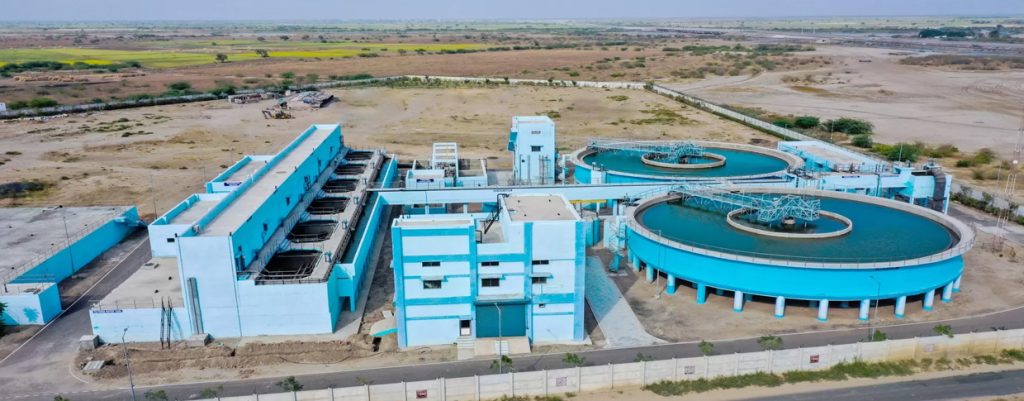
India’s rapid urbanisation has made water management in Dholera one of the most closely watched smart city models supporting sustainable development. DSIR, India’s first greenfield smart city in Gujarat, is built with an integrated, technology-driven approach to supply, treatment, and conservation. Unlike older cities that retrofit systems, Dholera embedded smart planning into its infrastructure from day one.
Despite this forward-thinking approach, Dholera faces challenges in managing urban water efficiently, such as ensuring reliable utility supply amid growing demand, minimizing water loss through leakage or theft, and maintaining advanced infrastructure. Additionally, balancing sustainable usage with future population growth and adapting to potential fluctuations in water sources remain critical concerns.
What strategies are used for water management in Dholera?
DSIR uses a multi-layered strategy combining rainwater harvesting, a 50 MLD treatment plant, sewage and effluent treatment, stormwater canals, and an AI-powered smart grid in Dholera Smart City. This ensures reliable supply for residential, industrial, and commercial needs while minimising wastage and promoting conservation.
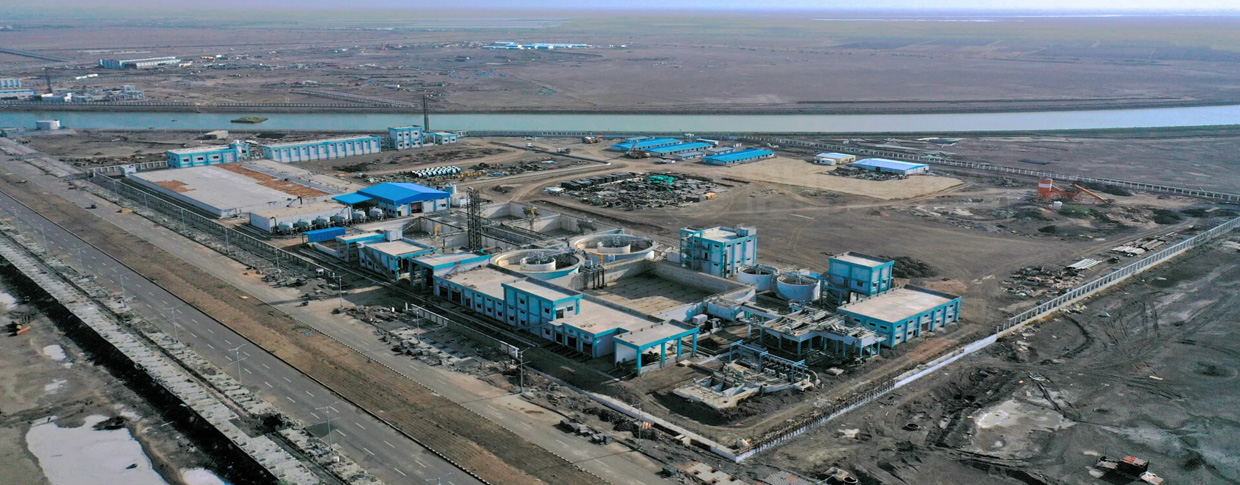
Dholera Water Treatment Plant
The Dholera water treatment plant, featuring modular facilities for potable and industrial water treatment, utilizes the Narmada Canal as its primary source.
Infrastructure Projects
Phase 1 trunk infrastructure is nearly complete. Operationally active projects include:
-
50 MLD WTP supplying potable supply to all Phase 1 zones
-
Master Balancing Reservoir managing city-wide pressure
-
Elevated Service Reservoirs distributing across Phase 1
-
10 MLD STP with recycled output used for non-potable reuse
-
20 MLD CETP handling industrial effluent from manufacturing units Underground pipeline network covering the full Phase 1 grid, the City Integrated Operations Centre (CIOC) with SCADA monitoring live across all utilities Compared to other smart cities in India, Dholera’s approach to hydro management stands out for its advanced use of STP facilities and integrated automation. The extensive underground pipeline network and real-time SCADA monitoring allow for efficient distribution and recycling of both potable and non-potable water—features that are often more fragmented or less technologically advanced in other projects. Dholera’s commitment to sustainable practices and centralized control offers a model that other emerging smart cities are starting to emulate.
-
-
Underground pipeline network covering the full Phase 1 grid
-
City Integrated Operations Centre (CIOC) with SCADA monitoring live across all utilities
These completed projects confirm that sustainable urban development in Dholera is no longer just planned, it is operational.
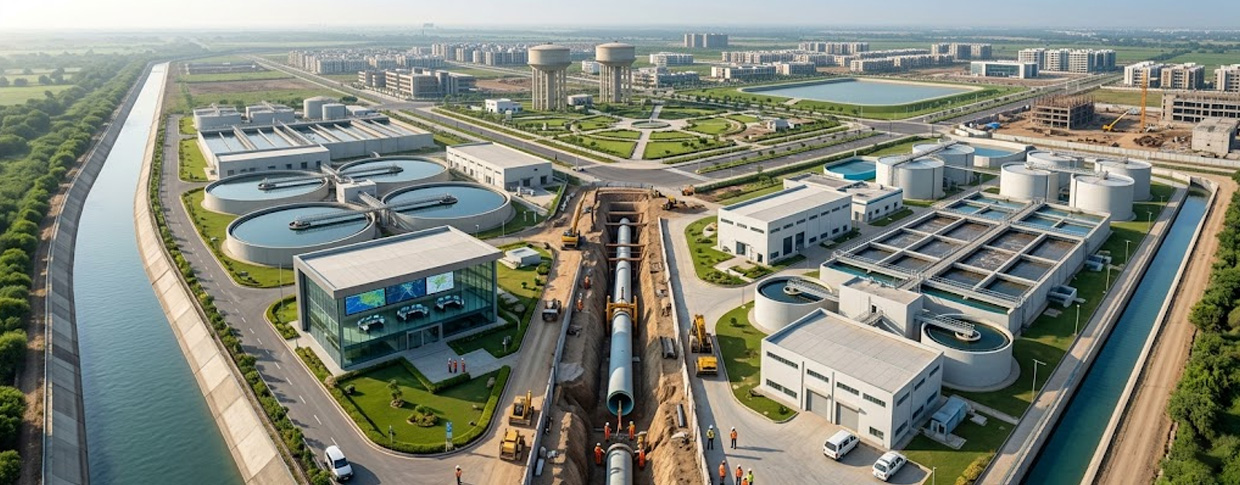
Smart Technology Powers the Water Management System
A city-wide IoT sensor network runs across pipelines, reservoirs, and pumping stations, promoting environmental sustainability. The Smart Grid Project adds AI-driven capabilities including leak detection, predictive demand analytics, digital usage dashboards, and real-time alerts. All data feeds into the Command and Control Centre, managing pressure, CCTV, traffic, and power from one dashboard.
What Role Do Sewage and Wastewater Systems Play in Gujarat’s DSIR?
The sewage treatment plant is central to DSIR’s circular economy, supporting industrial growth. Treated sewage is recycled for industrial processes, landscaping, and construction, reducing demand on potable supply. The 20 MLD CETP handles heavy industrial wastewater to global environmental standards. Together, the WTP, STP, and CETP create a complete lifecycle from supply to safe disposal and reuse.

What Future Projects Are Planned for Dholera’s Water Infrastructure?
DSIR plans WTP and STP capacity expansions, Smart Grid Phase 2, enhanced rainwater harvesting, and increased wastewater reuse for a closed-loop water management system.
Stormwater, Harvesting and Conservation in Dholera, Gujarat
The stormwater canal system prevents urban flooding given Gujarat’s seasonal rainfall, while feeding into reservoirs for reuse. By integrating modern infrastructure, rainwater harvesting recharges groundwater and supports non-potable uses. Greywater recycling and drought-resistant landscaping reduce load on the main supply chain, making the overall approach genuinely circular.
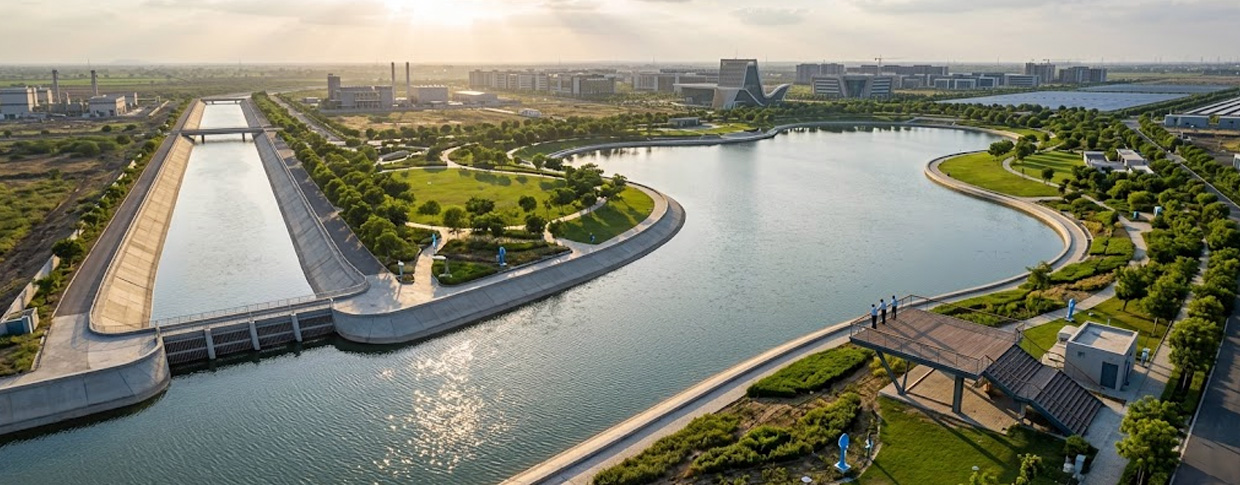
Conclusion: Water Management in Dholera
Water management in Dholera represents one of the most complete urban systems in India. From the Dholera utility treatment plant and Narmada Canal supply to AI-powered smart grids and wastewater recycling, every layer is built for scale and sustainability in the context of rapid urbanization, setting a benchmark Gujarat is sharing with the rest of India.