

India is becoming an increasingly important destination for international businesses looking for manufacturing, technology, infrastructure, and long-term growth opportunities. Gujarat has a particularly strong position because of its established business ecosystem and major infrastructure projects. Within this landscape, foreign investment in Dholera is gaining attention as the region develops into a planned economic and urban destination.
The Dholera Special Investment Region (DSIR), commonly known as Dholera SIR, combines planned land use, modern infrastructure, smart governance, transportation networks, and dedicated areas for economic activity. Its development is intended to support businesses while creating a connected urban environment.
For overseas investors, however, the opportunity should be evaluated beyond property prices. Infrastructure development, government support, connectivity, regulations, land use, and future growth potential all matter when assessing an investment.
Why Is Foreign Investment in Dholera Increasing?
The region is attracting attention because of its strategic location, planned infrastructure, government support, connectivity, and emerging business ecosystem. These characteristics can appeal to companies seeking a long-term base for manufacturing, logistics, technology, renewable energy, or related commercial activity.
Unlike mature cities, the area is being developed through a planned master plan. Industrial land, utilities, roads, commercial spaces, residential areas, and smart city infrastructure are being considered together.
This gives investors a way to evaluate an emerging market based on its planned development rather than only its current activity. For early investors, the attraction can come from participating before the wider ecosystem reaches maturity.

What Is Dholera SIR?
Dholera SIR is a Special Investment Region created within Gujarat’s broader framework for planned economic development. It is designed to accommodate businesses, infrastructure, housing, utilities, and supporting services within an integrated development model.
The SIR Act provides the legal framework for Special Investment Regions in Gujarat. Development also connects with India’s broader industrial corridor strategy, supported by central and state institutions.
For foreign investment in Dholera, this framework is important because it provides a structured approach to land use and infrastructure planning. Investors should still verify individual property titles, approvals, permitted uses, and development status before making commitments.
What Are the Key Benefits?
The potential benefits include planned infrastructure, connectivity, access to land, renewable energy potential, government support, and proximity to emerging manufacturing activity.
The opportunity is also broader than residential real estate. Depending on applicable regulations, investors may consider manufacturing, logistics, commercial spaces, clean energy, technology, and supporting services.
A planned investment region can also provide room for future expansion. Businesses may evaluate not only their immediate requirements but also whether the surrounding infrastructure and economic ecosystem can support growth over a longer period.
These advantages do not mean that every property or project will generate high returns. Foreign investment in Dholera should always be assessed according to the investor’s objectives, risk tolerance, time horizon, and due diligence findings.
How Can Foreign Investors Start Investing?
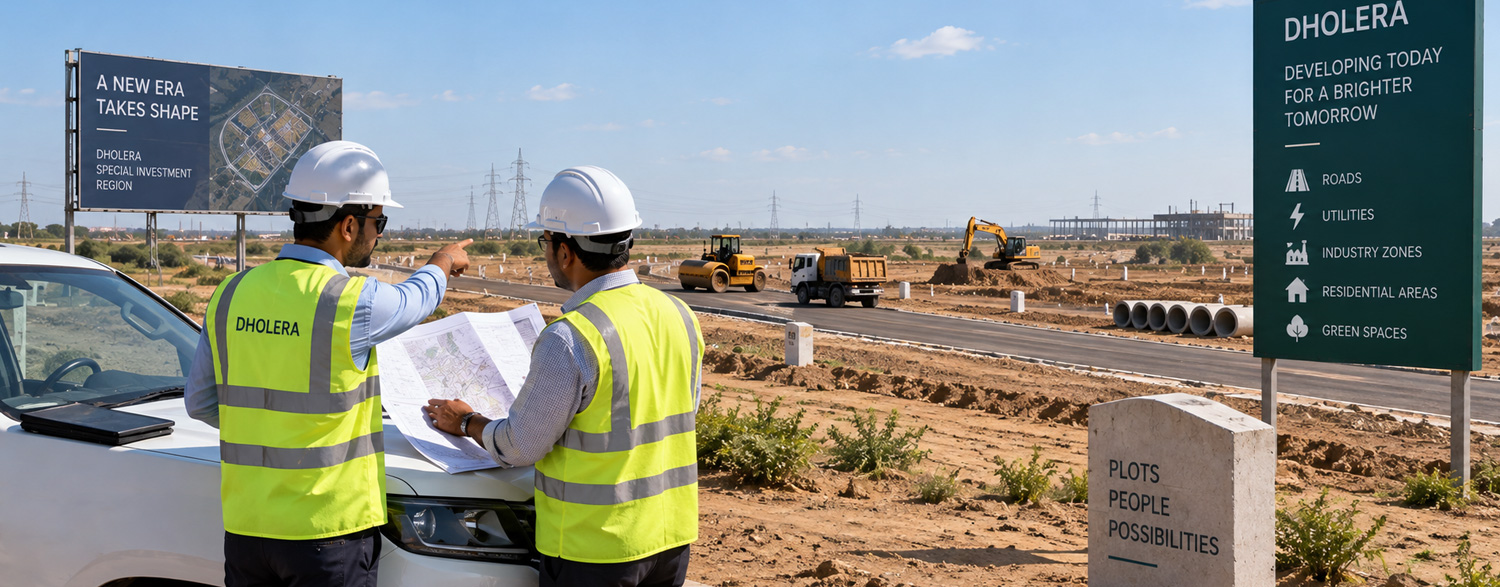
Foreign investors should first identify their objective, whether it involves establishing a business, purchasing eligible property, acquiring industrial land, or exploring another investment opportunity. They should then verify ownership, land use, approvals, infrastructure status, and applicable regulations.
Professional legal and financial advice can help overseas investors understand taxation, foreign exchange requirements, transaction structures, and reporting obligations.
Investors should also distinguish between completed infrastructure and projects that remain under development. This is especially important when evaluating future growth potential or property values.
Which Sectors Offer Opportunities?
The developing ecosystem can create opportunities across manufacturing, electronics, semiconductors, renewable energy, logistics, technology, engineering, and commercial development.
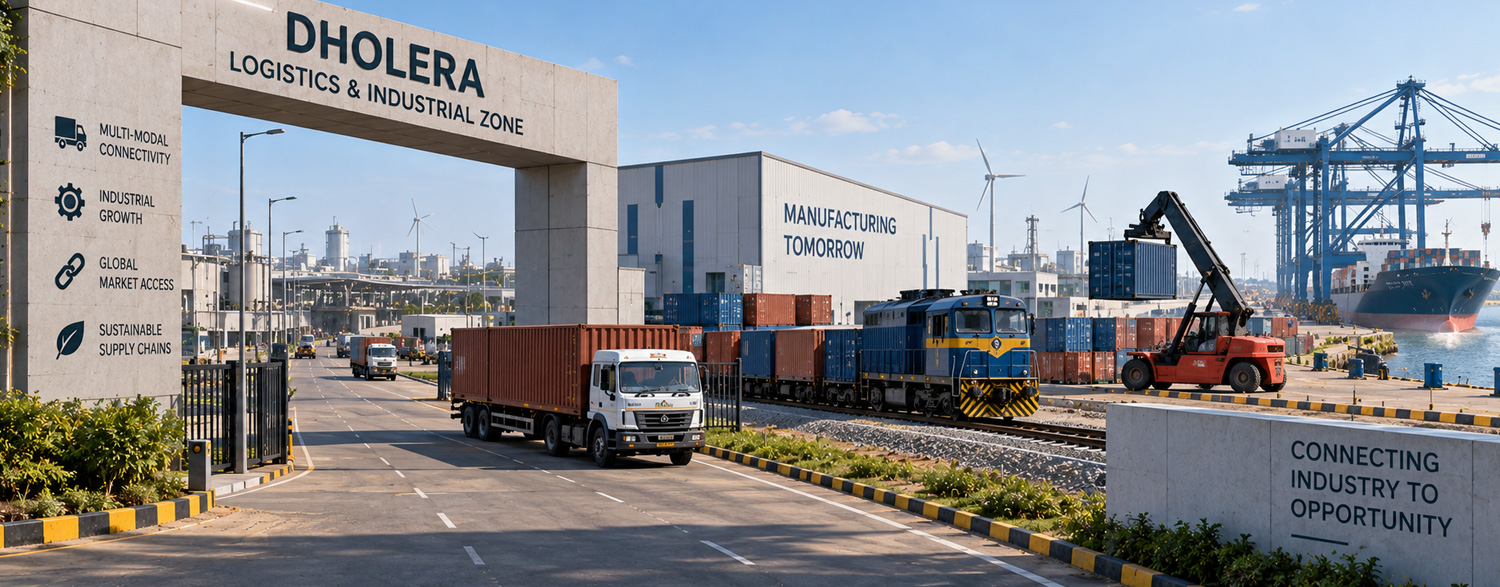
Manufacturers may be interested in industrial plots and supporting infrastructure. Logistics businesses can evaluate transportation links and proximity to supply chains. Energy-focused companies can examine opportunities connected with solar power and clean energy.
Supporting businesses may also benefit as employment and economic activity increase. This can include warehousing, commercial spaces, accommodation, professional services, and other businesses serving companies and workers.
What Government Support Exists?
Government support includes infrastructure development, planning frameworks, industrial policies, and institutional coordination. The Government of India and Gujarat government are involved through different agencies and initiatives associated with regional and infrastructure development.
The National Industrial Corridor Development Corporation is connected with India’s wider industrial corridor program, while state-level authorities have an important role in implementation.
Incentives can vary according to sector, investment structure, project location, employment commitments, and prevailing policy. Investors should therefore verify current schemes with the relevant authorities rather than assuming that every project receives the same benefits.
Why Does the International Airport Matter?
The Dholera International Airport is intended to strengthen long-term connectivity for the region. Air connectivity can support business travel, workforce mobility, logistics, executive movement, and the transportation of high-value goods.
Its importance becomes clearer when considered alongside roads, railways, and port connections. Together, these infrastructure projects can improve accessibility for companies operating within the investment region.
For foreign investment in Dholera, connectivity can influence logistics costs, supply-chain efficiency, accessibility, and the ability of companies to serve customers across India and international markets.
How Does the Smart City Support Growth?
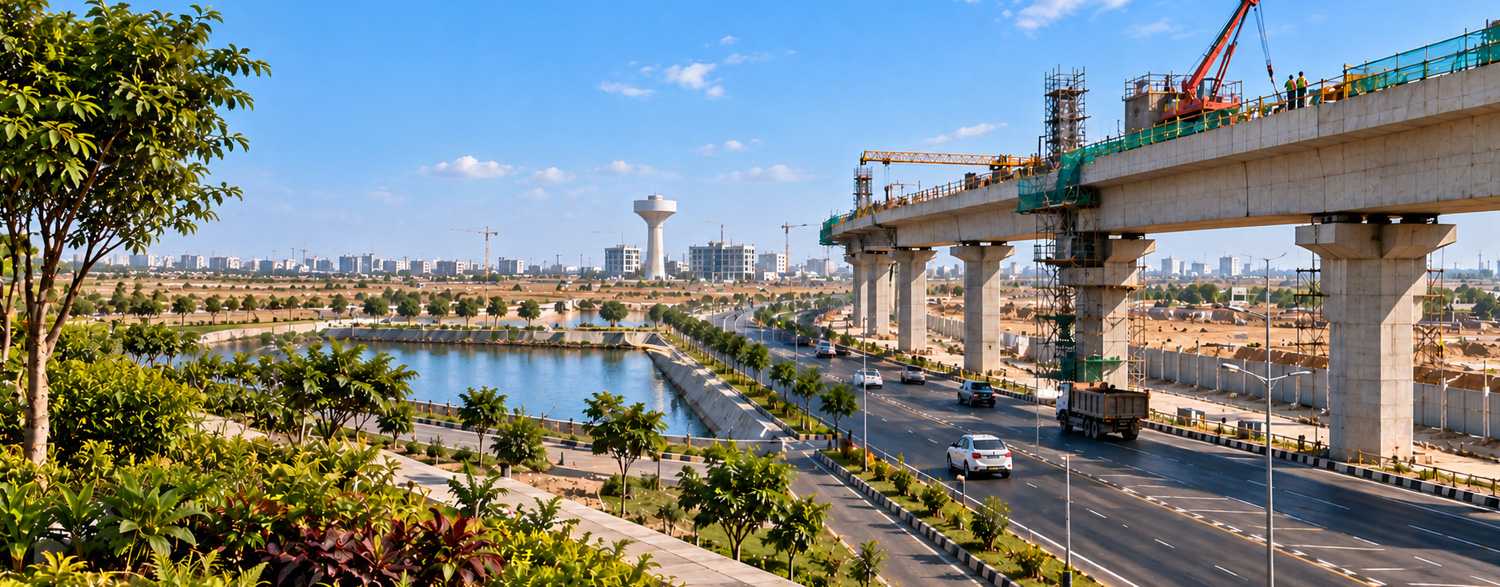
The Dholera Smart City project follows an integrated approach combining modern infrastructure, smart governance, utilities, transportation, and sustainable development.
Smart city planning is not limited to digital systems. Reliable water, power, communications, waste management, transportation, and administrative services can all influence the environment in which businesses operate.
This approach can support both economic activity and urban development. Over time, supporting services and commercial spaces can develop around businesses and employment centres.
Which Global Companies Are Investing?
Major corporate announcements have increased international awareness of the region, particularly around semiconductor and advanced manufacturing activity. Tata Group’s semiconductor plans have contributed to this growing profile.
Investors should distinguish between companies that have announced plans, committed investments, started construction, and become operational. These stages represent different levels of development.
The presence of major businesses can strengthen an area’s economic ecosystem, but it should not be treated as a guarantee that nearby property will appreciate. Global investors should evaluate each opportunity independently.
Is It Suitable for Real Estate Investment?
The region may interest investors seeking long-term exposure to a developing economic destination. However, real estate decisions depend on title, permitted land use, approvals, location, infrastructure, demand, pricing, and investment horizon.
Residential plots, industrial plots, and commercial spaces have different demand drivers. An investor should therefore assess the intended use rather than treating every property as the same investment.
Those considering Dholera real estate should also investigate the developer or seller, documentation, registration requirements, access roads, utilities, and surrounding development before purchasing.
What Risks Should Investors Consider?
Foreign investors should consider regulatory changes, development timelines, land title, infrastructure availability, liquidity, taxation, currency movements, market demand, and changes in government policy.
A major consideration is the difference between planned and operational infrastructure. Future infrastructure projects can influence an investment thesis, but completion dates and implementation can change.
Investors should also avoid relying solely on claims about future property values or guaranteed returns. For foreign investment in Dholera, independent legal, financial, and commercial due diligence is essential.
Can NRIs Invest in Projects?
NRIs may invest in eligible categories of Indian property subject to applicable laws and regulations. Requirements can vary depending on property type, transaction structure, payment method, taxation, and repatriation rules.
Before purchasing residential or commercial property, NRIs should verify the latest foreign exchange and property regulations.
Because rules can change, current advice from a qualified legal or financial professional should be obtained before completing a transaction.
How Does It Compare With Other Cities?
Established cities such as Ahmedabad, Mumbai, Bengaluru, Hyderabad, and Delhi offer mature markets, established populations, existing business networks, and developed infrastructure.
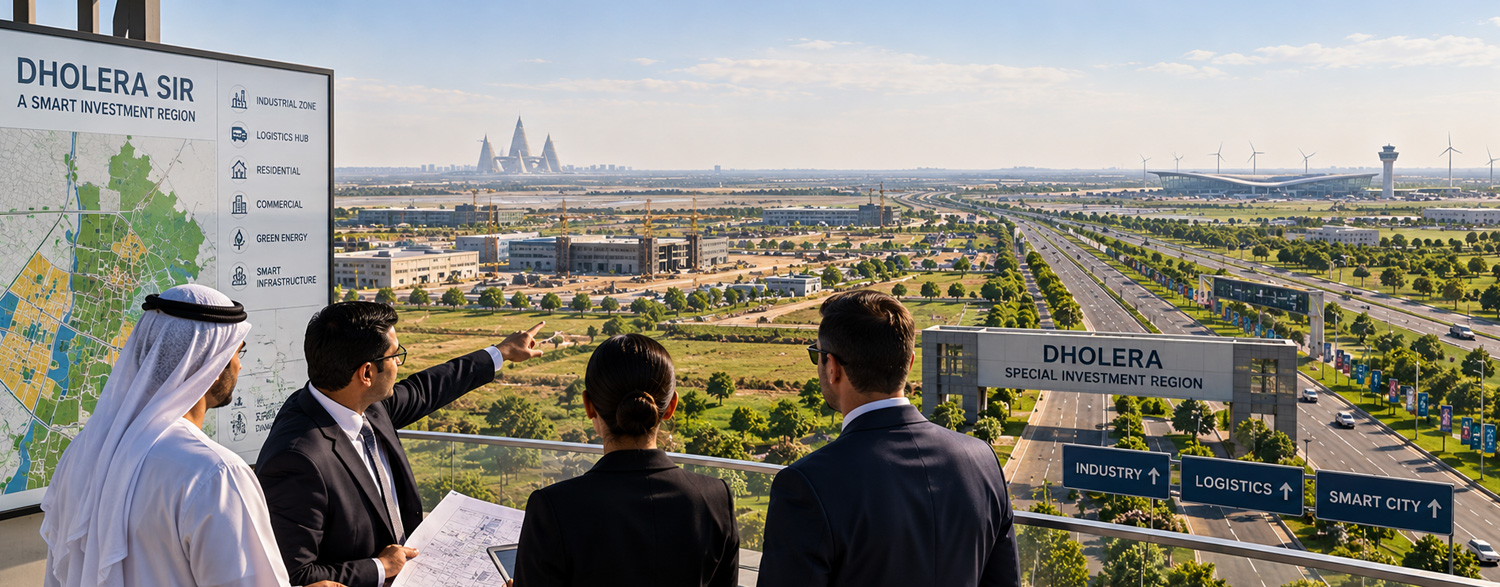
A greenfield development offers a different proposition. Its potential is more closely connected to future infrastructure, manufacturing, logistics, urban development, and economic expansion.
For foreign investment in Dholera, the right comparison depends on the investor’s objective. A company seeking immediate access to an established market may prefer a mature city, while a business planning long-term expansion may consider a developing investment region.
How Can Foreign Companies Set Up Operations?
Foreign companies generally need to choose an appropriate business structure, understand sector-specific rules, complete required registrations, secure suitable premises, and establish systems for taxation, banking, employment, and compliance.
Requirements vary according to the company’s activities. A manufacturer, technology company, logistics operator, and commercial business may each face different approvals.
Businesses should review requirements from the central government, state government, and relevant authorities before establishing operations. Land use and environmental requirements should also be considered where applicable.
Why Could It Become a Global Hub?
The combination of strategic location, advanced infrastructure, transportation links, renewable energy, industrial land, and planned urban development gives the region the potential to become an important economic hub.
The project is often associated with India’s greenfield smart city ambitions because infrastructure and land use are planned together rather than being added gradually to an established urban area.
Its long-term success will depend on infrastructure delivery, private investment, business activity, employment, connectivity, and continued economic growth.
What Is the Future Investment Potential?
Future growth will depend on infrastructure completion, manufacturing activity, connectivity, employment, business formation, and demand for land and services.
Early investors may gain exposure to a developing market before it becomes more established. At the same time, early-stage opportunities can involve greater uncertainty and longer holding periods.
A balanced approach is therefore important. Investors should compare potential appreciation with development timelines, liquidity, regulations, and the fundamentals of the specific asset.
Key Factors for Global Investors
When evaluating an opportunity, investors should focus on land use, title, approvals, infrastructure, connectivity, pricing, developer credentials, regulations, and exit options.
Other factors can include access to utilities, proximity to employment centres, transportation infrastructure, commercial demand, and the pace of surrounding development.
The strongest investment decisions are based on verified information rather than promotional projections.
Is Dholera a Good Destination for Foreign Investors?
It can be relevant for investors seeking long-term opportunities in manufacturing, logistics, renewable energy, technology, infrastructure, or supporting real estate. Suitability depends on the investor’s objectives, applicable regulations, project quality, development stage, and tolerance for risk.
Can Foreigners Buy Property Here?
Foreign ownership of Indian property is subject to applicable laws and regulations. Eligibility can depend on investor status and property type. Overseas buyers should obtain current legal and tax advice before entering a property transaction.
What Industries Are Developing Here?
The region is being positioned for advanced manufacturing, electronics, semiconductor-related activity, renewable energy, engineering, logistics, technology, and supporting businesses. These sectors can contribute to broader economic growth and create additional business opportunities.
Is This Only a Real Estate Opportunity?
No. The wider opportunity includes manufacturing, logistics, renewable energy, technology, commercial activity, and business operations. Real estate is one component of a larger economic development strategy.
What Should Investors Check First?
Investors should verify title, land use, approvals, infrastructure status, developer credentials, transaction documents, applicable regulations, taxation, and exit options. Independent legal and financial due diligence can help identify risks before capital is committed.
Final Thoughts
Dholera is being developed around a long-term vision combining economic activity, modern infrastructure, smart governance, sustainable development, and planned urban growth. Its position within Gujarat’s wider economy makes it relevant to international businesses and investors evaluating India.
For foreign investment in Dholera, the strongest approach is to focus on fundamentals rather than promotional claims. Investors should examine infrastructure, land use, connectivity, approvals, regulations, market demand, and development progress before making a decision.
The region offers an opportunity to participate in India’s expanding manufacturing and infrastructure story, but every investment remains different. Careful research and professional due diligence should form the foundation of any investment decision.