

How to Check Dholera Land Records on AnyROR: A Guide
Buying a parcel of land starts with excitement, but seasoned investors in India’s real estate market know the foundation of any transaction is verifying official Dholera land records. Inside the Dholera Special Investment Region (DSIR), validating state records protects your capital and turns your plot purchase into a genuinely safe investment.
Checking title history is no longer a slow manual ordeal. Gujarat’s digital revenue portal lets anyone inspect property papers online within minutes.
How to check Dholera land records online?
To check Dholera land records online, visit the official AnyRoR Gujarat portal, select rural or urban plot records, and choose Ahmedabad district with Dholera taluka. Enter your target village and survey number to instantly view or download verified 7/12 extracts and ownership details.

Official Gujarat land record check on AnyRoR
Running an official Gujarat land record check starts at the official Gujarat land records website maintained by the Government of Gujarat: AnyRoR (anyror.gujarat.gov.in). The computerized portal gives property buyers immediate transparency over registered plot rights.
On the homepage, the portal presents clear pathways depending on the administrative classification of your parcel. You can inspect rural land records for village areas or urban plot records for developed zones, and mobile users can view these files via state revenue smartphone apps.
Finding a Dholera survey number on AnyROR
To check property details on AnyROR Dholera, keep the assigned survey number ready from your sale agreement or layout map. If you do not have it, ask the seller or broker for the layout document where the survey identification is recorded.
Here is the straightforward method to retrieve your record:
- Open anyror.gujarat.gov.in and click on View Land Record – Rural.
- From the drop-down menu, choose VF-7 Survey No Detail or VF-8A Khata Detail.
- Under the district list, pick Ahmedabad, because Dholera falls administratively within Ahmedabad district.
- Select Dholera as the taluka.
- Choose the specific revenue village where the land sits.
- Enter the target survey number or sub-division code.
- Fill in the security captcha code and click Get Record Detail.
Within seconds, the system displays the digitized ledger entry right on your screen.

Reading the Dholera 7/12 extract and utara
When inspecting a rural plot, your key document is the Dholera 7/12 extract, known locally as the 7/12 utara. This document combines two distinct village forms into a single official page.
Village Form 7 establishes land ownership, showing the registered owner name, total area, and classification. Confirming that the current owner’s name matches the person signing your sales agreement prevents transactions involving an unauthorized landowner or unapproved farmland. Village Form 12 details cultivation, plot use, and active liabilities, highlighting pending legal disputes or unresolved court cases tied to that specific soil.
Mutation entry and encumbrance certificate review
A clean 7/12 extract must be backed by the historical mutation entry chain in Village Form 6. This record traces seller’s ownership and confirms the seller’s name across past successions or sales. Reviewing mutation notes alongside an encumbrance certificate guards against fake land titles and duplicate documents hiding unpaid debts.
Matching the registered deed with revenue files
Never rely solely on digital screens. Cross-verify online files with the physical title deed. A qualified property lawyer should conduct independent due diligence, reviewing historical sale records and primary legal documents.
Matching deed measurements with revenue entries, and confirming that past stamp duty and sub-registrar registration details were settled, keeps paperwork secure for all future legal purposes and subsequent bank evaluations.

AnyROR Dholera; Dholera 7/12 extract; Gujarat land record check
DSIR.To confirm genuine plot ownership inside DSIR, inspect a complete package of property documents:
- Digitized AnyRoR VF-7 and VF-8A land extracts
- Form 6 mutation register showing title lineage
- Registered sale deed and Index II copy
- Encumbrance certificate covering thirty years
- Official Non-Agricultural (na) conversion order
- Town-planning zoning clearance aligned with the regional master plan
Verifying every document clarifies the legal title before paying any advance.
What is the process for registering plots in Dholera?
Registering a plot begins with drafting the sale deed through an advocate once title checks are clear. The parties pay applicable Gujarat stamp duty and registration fees through authorized e-stamping channels based on either the agreement price or the state jantri rate.
Both buyer and seller then appear at the sub-registrar office covering DSIR with original identity proofs and title records. After biometric scanning and signature recording, the sub-registrar registers the conveyance and issues the certified Index II document.
How computerized records benefit Dholera buyers
The computerization of land records across Gujarat provides immense advantages for buyers. Centralized digital databases create an open public record that stops fraudulent double-selling.
Prospective investors can confirm real-time title status without relying solely on middlemen. Instant access to computerized records reveals active encumbrances, protects buyers against forged papers, and accelerates routine bank loan approvals.
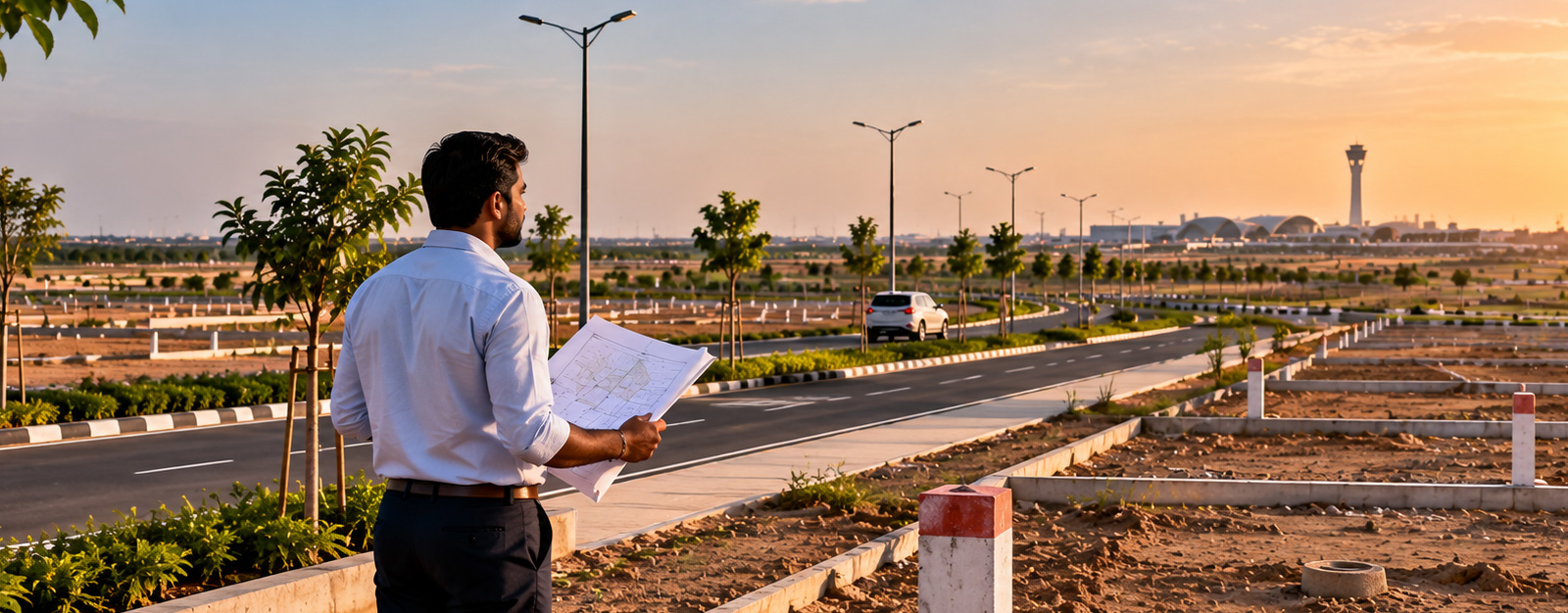
Avoiding fake land titles in DSIR
Rapid expansion across the special investment region represents a great opportunity, but buyers must take firm safeguards.
Ensure the layout holds an official planning noc and sanctions from the Dholera SIR Authority, conforming to guidelines from the DDA or DSIR. Verifying authentic plot documents protects your overall Dholera investment and guarantees smooth title transfers during future resale.
Final checklist before your plot booking
Before finalizing your plot booking, follow sensible physical precautions. Take an official printout of the AnyRoR record to the local Dholera Talati office and jurisdictional revenue offices to ensure the entry is completely verified and possesses unquestioned legal legitimacy.
Confirm that converted rural land matches approved detailed plot mapping, arterial road proximity, and official survey data on the urban property card across the designated land zone.
Checking the legal status and accurate property details of Dholera land records on anyror gives buyers across Gujarat and India peace of mind. Confirming the registered deed, matching the rural utara, verifying the latest mutation, and inspecting every final certificate guarantees your acquisition in DSIR remains secure.