Ahmedabad Dholera Rail Route, Cost and Latest Update
The Ahmedabad Dholera rail corridor is reshaping regional mobility across western Gujarat. Jointly supported by the Government of India and Government of Gujarat, this Ahmedabad Dholera semi high speed rail initiative links Gujarat’s largest commercial hub directly with Dholera Special Investment Region. By bridging urban industry and planned zones, it strengthens industrial infrastructure and improves real estate access across the broader Dholera region.
What Is the Dholera Semi High Speed Rail Project?
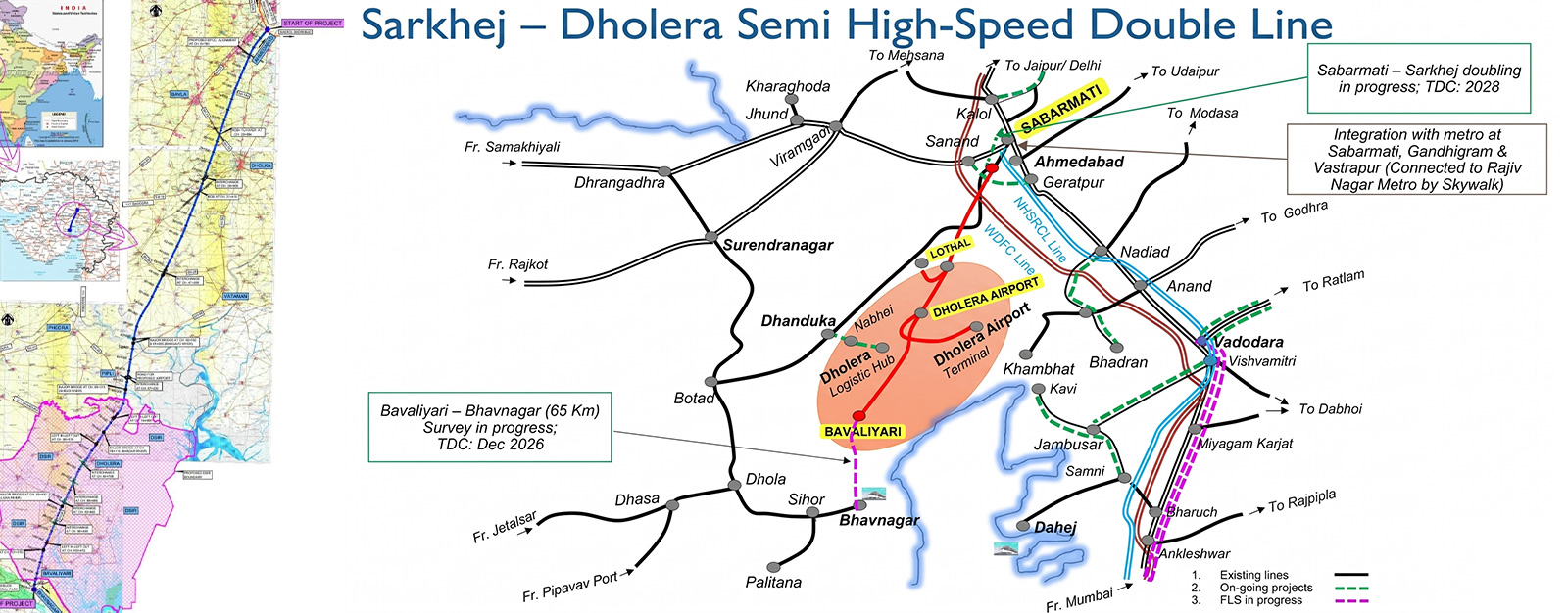
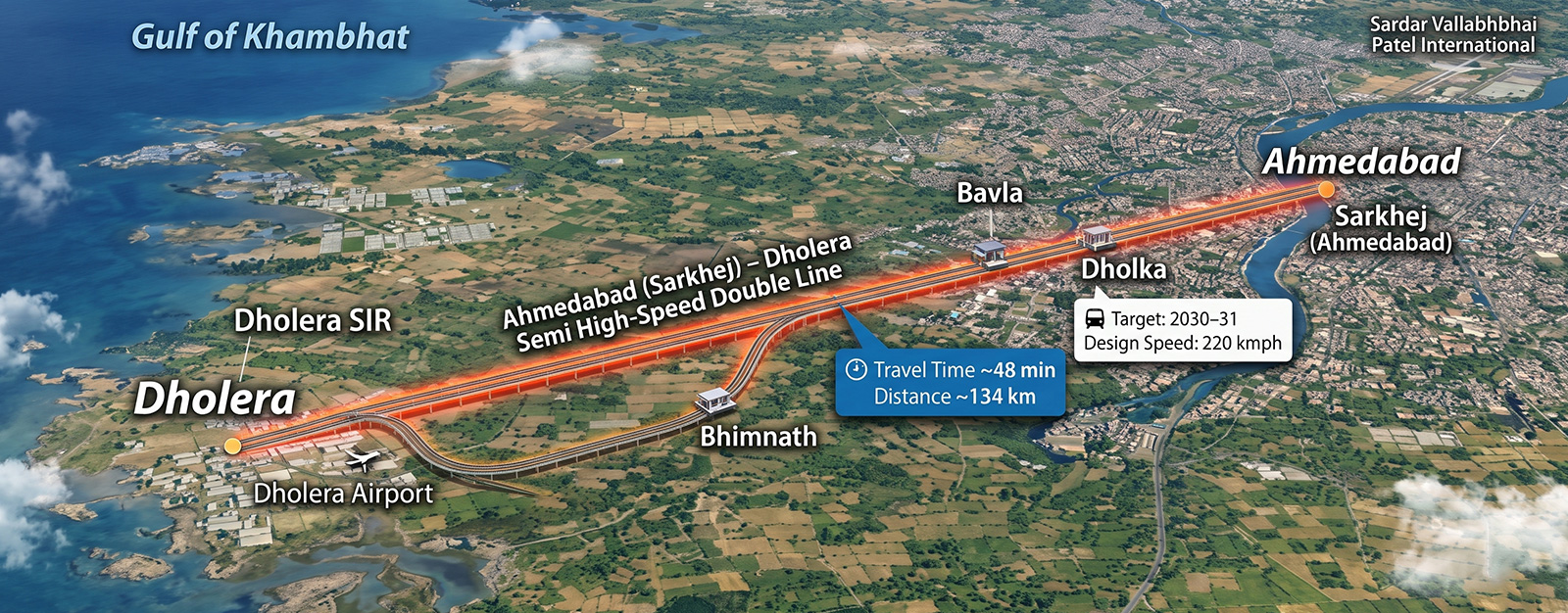
The initiative is an approved high speed rail project of Indian Railways spanning about 134 km between Sarkhej and Dholera SIR. Planned under the PM Gati Shakti National Master Plan, this double rail line uses indigenous technology to deliver fast, reliable regional passenger transport across central Gujarat.
As India’s first indigenous semi high-speed railway corridor, this flagship Dholera rail project connects Sarkhej’s urban network with a major planned smart city while establishing a modern engineering benchmark for future infrastructure projects nationwide. Its alignment has been mapped carefully to serve industrial hubs, logistics zones, and emerging urban clusters without disrupting existing highways.
When Did the Union Cabinet Approve This Initiative?
The Union Cabinet, through the Cabinet Committee on Economic Affairs chaired by Prime Minister Narendra Modi, officially approved the Ahmedabad Dholera rail link on 13 May 2026. Cleared by the Ministry of Railways, this major milestone places Dholera Smart City on Gujarat’s next-generation transport network. The formal cabinet clearance marked the transition from feasibility planning into structured engineering preparation and public tendering.
Estimated Cost of Ahmedabad Dholera Rail
The total estimated cost of the corridor is approximately ₹20,667 crore, with completion targeted for 2030–31. Readers should note that the overall Cabinet-approved project cost of ₹20,667 crore covers broader network development, land-related provisions, and systems integration, which differs from the ₹18,901.68 crore construction tender package subsequently floated by Western Railway for core civil and track execution.
Main Features of the Corridor
Designed as a high-capacity 134 km railway project with roughly 293 km of total track length including loops and spurs, the rail corridor integrates 13 stations, 74 km of elevated viaducts, three mega bridges, 39 road-under-bridges, and two grade-separated railway crossings. Extensive civil works are engineered to maintain uninterrupted high speed operations for passenger coaches and time-sensitive regional logistics.
Spur Lines and Station Infrastructure
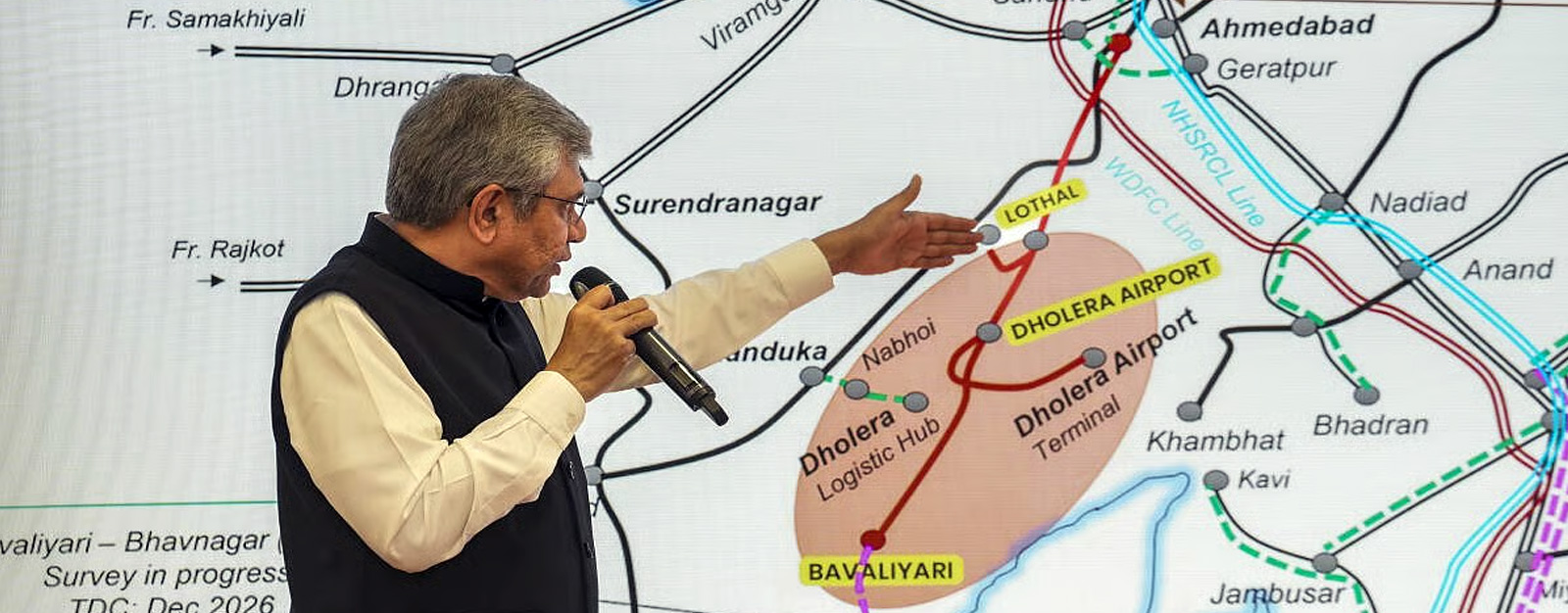
Beyond the main trunk alignment, two dedicated spur lines significantly widen regional access. An 8 km spur directly serves the Lothal National Maritime Heritage Complex, also known as Lothal NMHC, boosting cultural and heritage tourism access. Meanwhile, a 17 km branch connects directly to the upcoming Dholera International Airport, bringing travellers right inside the upcoming Dholera Airport terminal with modern station buildings planned along the route.
Track, Traction, and Control Systems
To support sustained high speed operations with minimal vibration, the alignment combines ballasted sections with durable ballastless track technology on elevated structures. An advanced 25 kV overhead traction network powers modern electric trainsets, while automated signalling and a centralized operating control centre monitor real-time traffic movement, delivering advanced infrastructure built to contemporary national safety and reliability benchmarks.
What Is the Expected Train Speed?
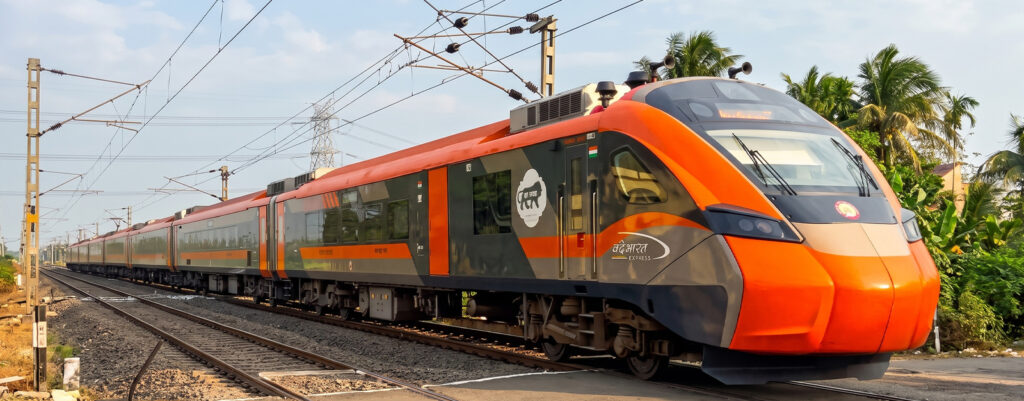
The new track is engineered for a 220 kmph design speed and an expected operational speed of roughly 200 kmph using Vande Bharat-style broad-gauge trainsets. As reporting in India Today and official briefings note, this performance will reduce travel time between Sarkhej and the investment region to about 34 to 48 minutes, making daily commuting and same-day business return trips practical.
Who Is Constructing This Line?
The Ministry of Railways oversees national policy and technical oversight, while implementation falls under Western Railway through a single-package EPC contract model. The winning infrastructure firm or joint venture must implement bridges, viaducts, track laying, electrification, and station works within stringent timelines and coordinate with the Government of Gujarat on land and utility clearances.
Has Any EPC Tender Been Floated?
Yes. On 31 July 2026, Western Railway floated an ₹18,901.68 crore EPC tender under Tender ID CPMSHSRADIWRSEJDSIREPC01 covering the main 134 km alignment alongside the airport and Lothal spurs. The contract mandates a 42-month completion window once awarded, encompassing formation, bridges, station buildings, ballastless track, overhead traction, signalling, and full commissioning before commercial operations begin.
Current Status of the Railway Project
Following Cabinet approval in May 2026, the Ahmedabad Dholera rail initiative remains in the active tendering and pre-award phase. Pre-bid stakeholder meetings took place in September 2026, with bid submission deadlines extended into January 2027 to accommodate detailed engineering reviews. Once the contract is awarded, the construction team will actively advance civil works and systems installation to meet the 2030–31 commissioning target.
Benefits for Gujarat and Its Smart City
For Gujarat, this railway corridor delivers substantial socio-economic advantages beyond faster passenger journeys. It connects roughly 284 villages with a combined population of around 5 lakh people to major employment centres. Better connectivity encourages regional economic growth, industrial growth, and balanced industrial development across manufacturing estates, logistics parks, and emerging commercial hubs along the southern corridor.
Furthermore, reliable transit strengthens workforce mobility and supports the everyday movement of people, components, and finished goods while raising overall logistics efficiency. Government estimates also project meaningful environmental savings once operational, including an annual reduction of 0.48 crore litres in imported fuel and 2 crore kg in carbon dioxide emissions.
Multimodal Connectivity and Real Estate Growth
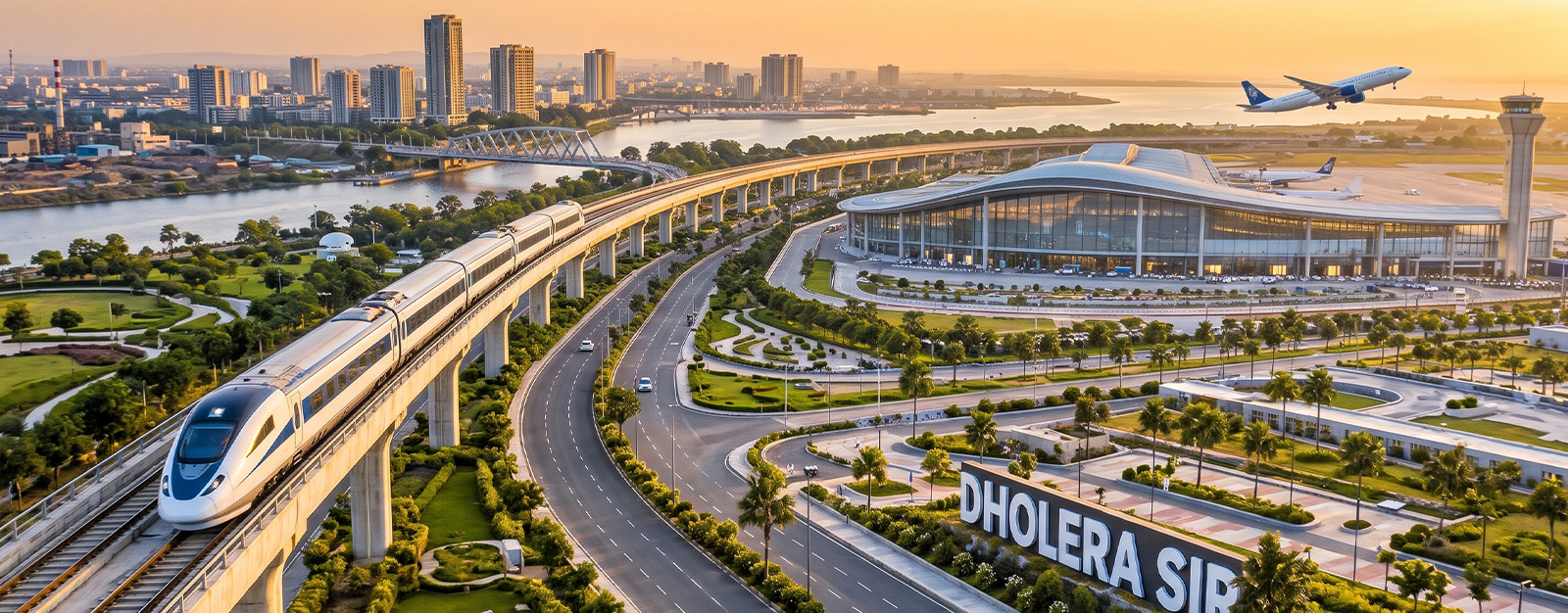
With the Dholera Expressway already enhancing road connectivity and aviation infrastructure progressing steadily, adding dedicated rail connectivity creates true multimodal connectivity across the region. Engineers, corporate teams, and residents gain fast, predictable links joining the international aviation hub, Lothal’s maritime complex, and central Gujarat without depending exclusively on highway traffic during peak business hours.
This coordinated infrastructure development supports the planned growth of Dholera and influences broader real estate interest in the area. For individuals evaluating Mirrikh plotted developments near the investment zone, upcoming transit access simply adds practical regional travel convenience alongside established highway routes and civic utilities.
FAQs on Ahmedabad Dholera Rail
How does this passenger corridor differ from the Bhimnath freight link? The Bhimnath branch handles industrial freight movement, whereas this semi high-speed passenger corridor spans 134 km from Sarkhej with dedicated spurs and 220 kmph track engineering for rapid regional transit.
When will passenger services begin operating along this route? With EPC bidding continuing into early 2027 and a 42-month construction schedule after award, the Ministry of Railways targets full commissioning and operational readiness by 2030–31.
Which major destinations does the new alignment connect? It directly links Sarkhej with the Special Investment Region, the maritime heritage complex at Lothal, and the upcoming aviation terminal, creating unified regional transit across central Gujarat’s fastest-developing industrial and urban corridor.