Dholera Smart City Vision: India’s Future Smart City
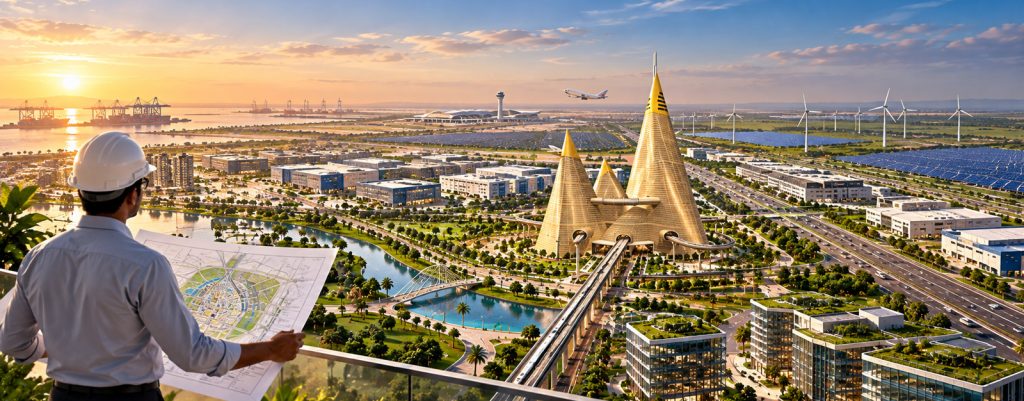
Dholera Smart City represents a long-term approach to urban development, industrial growth, connectivity, and sustainable living. Planned as a greenfield smart city, the project is designed to combine modern infrastructure with large-scale industrial development and technology-driven services. Its broader objective is to create an environment where industries, businesses, residents, and infrastructure can develop together rather than through disconnected expansion.
The Dholera Smart City vision is closely connected with the development of the Dholera Special Investment Region (DSIR), a major node of the Delhi-Mumbai Industrial Corridor. According to the National Industrial Corridor Development Corporation (NICDC), DSIR spans about 920 sq km, while its 22.54 sq km Activation Area has been developed with trunk infrastructure.
The project therefore goes beyond the idea of building another urban centre. Its development plan focuses on creating an integrated industrial and residential ecosystem supported by transport networks, utilities, digital connectivity, renewable energy, and planned land use.
What Is the Dholera Smart City Vision?
The Dholera Smart City vision is based on developing a planned, technology-enabled urban and industrial region that can support economic activity over the long term. Instead of relying primarily on incremental expansion, the city has been planned through a structured master plan that considers industrial zones, residential areas, commercial activity, infrastructure projects, utilities, transportation, and recreational areas.
The concept places considerable importance on quality of life alongside industrial development. Planned utilities, water management, roads, digital connectivity, and social infrastructure are intended to create a more organized environment for businesses and communities.
Dholera is also positioned within India’s industrial corridor strategy. The combination of a strategic location, large land parcels, planned infrastructure, and connectivity projects is intended to support industrial growth and attract domestic as well as global investment.
How Can Dholera Become India’s Future Smart City?
The idea of India’s future smart city is not limited to digital services or connected devices. It also involves how efficiently a city manages land, transportation, energy, water, industry, housing, and public infrastructure.
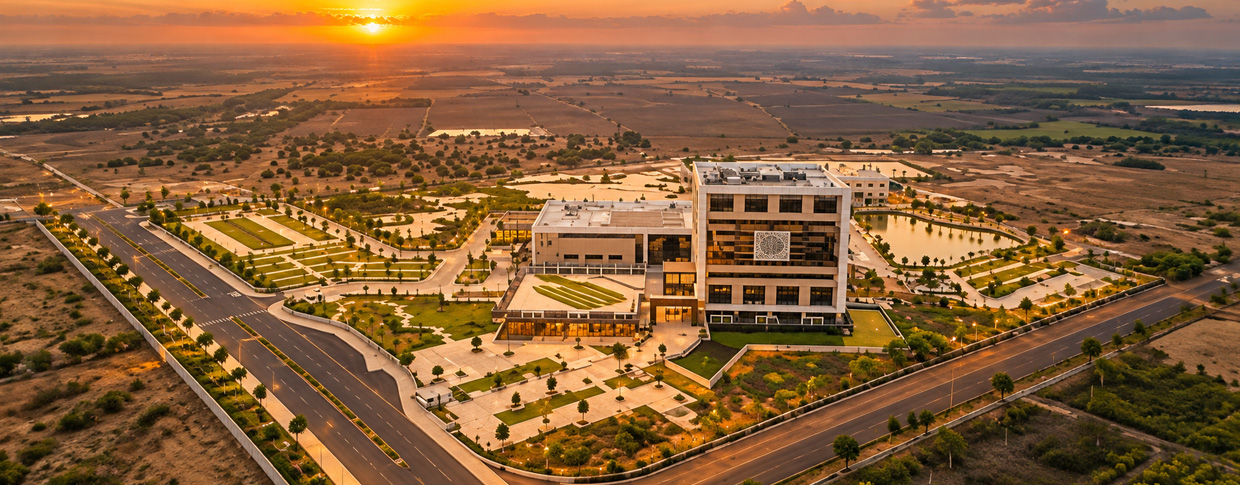
Dholera’s planned model brings these elements together. The city is being developed around an integrated infrastructure framework where industrial use, residential development, commercial activity, and supporting services can coexist within a planned land-use structure.
This approach can help create a more predictable environment for businesses while providing the foundation for sustainable urban development. NICDC describes DSIR as a planned smart and sustainable community intended to serve as a role model for future cities in India.
What Are the Key Projects Underway in Dholera Smart City?
Several major infrastructure projects are shaping the development of the region. These include trunk infrastructure in the Activation Area, transportation connectivity, industrial development, utility networks, and major manufacturing projects.
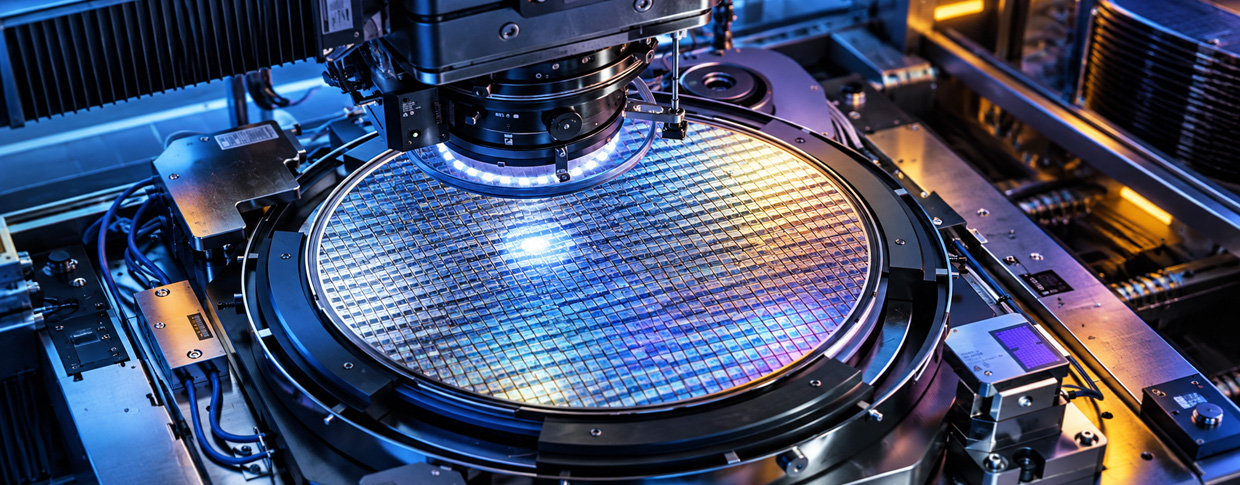
One of the most significant developments is the planned semiconductor fab being established by Tata Electronics. Tata Electronics says its DSIR facility is being developed as India’s first commercial 300 mm semiconductor fabrication facility, with planned capacity of up to 50,000 wafers per month.
The project is supported by a growing ecosystem of technology and materials partners. In September 2026, Tata Electronics announced collaborations involving companies including Kelington, Sojitz, NRS Corporation, Sumitomo Chemical, and Fujifilm to support the semiconductor supply chain around the DSIR facility.
What Makes Dholera Different From Other Indian Smart Cities?
A major feature of Dholera is its combination of industrial development and urban planning from the beginning. Many existing Indian cities have grown around established settlements and later introduced smart-city infrastructure. DSIR is being planned as a planned greenfield smart city, giving authorities greater scope to coordinate land use and infrastructure.
Its scale is another distinguishing feature. The Dholera Special Investment Region (DSIR) covers approximately 920 sq km, while the Activation Area covers 22.54 sq km. NICDC identifies sectors including semiconductors, aerospace and defence, solar component manufacturing, green hydrogen, pharmaceuticals and biotechnology, and heavy engineering.
The combination of industrial land, utilities, transportation, and urban facilities is intended to create an ecosystem rather than a standalone industrial estate.
How Does the Dholera Special Investment Region Support the Vision?
The Dholera Special Investment Region forms the larger economic and planning framework around the city. The region is managed by Dholera Industrial City Development Limited, a special purpose vehicle involving the central and Gujarat governments.
The Special Investment Region framework provides a structured approach to land use, infrastructure development, industrial zones, and investment facilitation. The special investment region model also allows development to be coordinated at a regional scale rather than treating every project as an isolated development.
The framework is supported by the Gujarat Special Investment Region Act, which provides the institutional foundation for SIR development in the state.
What Is the Current Development Status of Dholera Smart City?
The current development stage is moving from planning toward increasingly visible implementation. The activation area has been developed with major trunk infrastructure, while industrial projects are adding a manufacturing dimension to the region. NICDC states that the 22.54 sq km Activation Area is almost completed with trunk infrastructure in place.
The semiconductor project is particularly significant because construction and ecosystem development are progressing simultaneously. Tata Electronics reported in September 2026 that construction of its DSIR facility was progressing rapidly, while new partnerships are being established around materials, engineering, and operational readiness.
This means the Dholera Smart City project is best understood as an evolving development rather than a completed city.
How Has Government Planning Been Structured?
Government planning for Dholera has been structured around coordinated urban planning, industrial development, infrastructure, and regional connectivity. Dholera Industrial City Development Limited acts as the implementing SPV for the development framework, with participation from the Government of India and the Gujarat state government.
The approach involves defining land-use zones, establishing core infrastructure, developing utilities, and connecting the region to wider transportation networks. This planning structure is intended to reduce conflicts between industrial, residential, logistics, and recreational requirements.
Such coordination is important for a large-scale development because roads, water systems, electricity, telecommunications, drainage, and industrial facilities need to expand together.
How Could Dholera Support Economic Growth?
The Dholera model is strongly connected with economic growth and industrial development. Its planned industrial zone is intended to attract sectors requiring large land parcels and reliable infrastructure.
The presence of semiconductor manufacturing gives the region a high-technology manufacturing dimension. Tata Electronics’ planned facility is expected to manufacture chips for applications including automotive, computing, communications, mobile devices, and artificial intelligence.
A broader industrial ecosystem could also support suppliers, logistics providers, engineering companies, research institutions, service businesses, and skilled employment.
This is where the concept of a global manufacturing hub becomes relevant. Dholera is being positioned to connect Indian manufacturing capabilities with international supply chains rather than serving only local demand.
What Role Will Connectivity Play in Dholera?
Connectivity is one of the foundations of the development model. Dholera is being connected with major regional transportation networks, supporting movement of people, goods, and industrial materials.
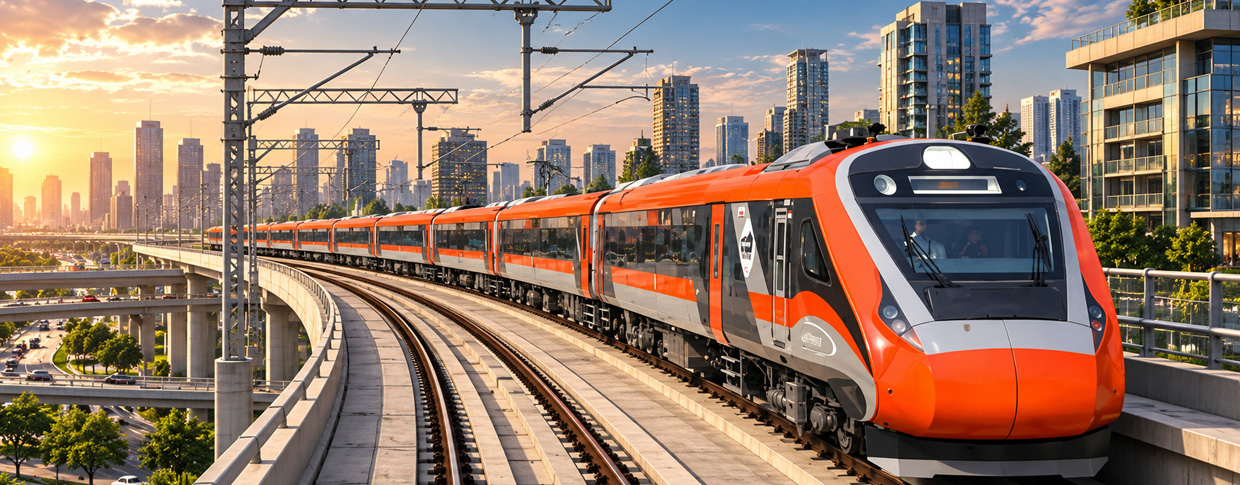
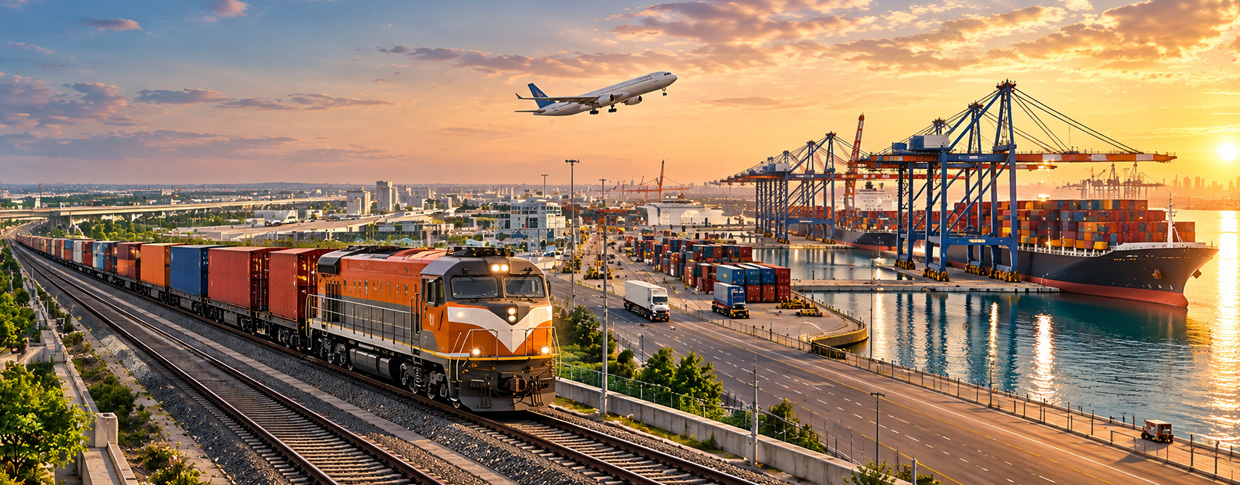
The wider connectivity framework includes the Dholera Expressway, road networks, the Dedicated Freight Corridor, and planned links to ports and airports. NICDC highlights connectivity through national highways and Dedicated Freight Corridors as an important advantage of DSIR.
The planned Dholera International Airport is also an important part of the region’s long-term connectivity story. Together with road and freight infrastructure, airport connectivity can potentially improve travel time and logistics access for industries operating in the region.
Why Is the Dholera International Airport Important?
The Dholera International Airport is intended to strengthen regional air connectivity and provide an additional transportation option for the developing industrial region. For a manufacturing-focused urban centre, airport access can be relevant for business travel, high-value goods, technical personnel, and international connections.
Airport connectivity becomes particularly important when a region is targeting global manufacturing, technology companies, and international investment.
However, airport development should be considered alongside other connectivity projects rather than as a standalone factor. Industrial corridors, road infrastructure, freight rail, and port connectivity collectively determine how efficiently goods can move through the region.
How Does Renewable Energy Support the Dholera Smart City Vision?
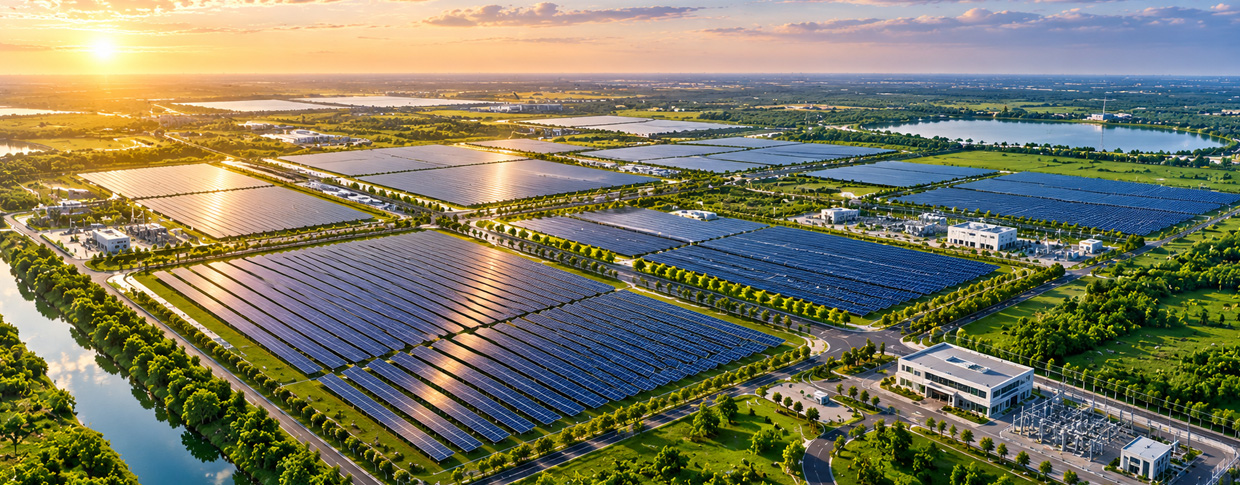
Renewable energy is another important component of the development model. Dholera has significant potential for solar power, and the Dholera Solar Park forms part of the region’s broader clean-energy ecosystem.
The use of solar power and other forms of green energy can support Manufacturing development while helping reduce dependence on conventional energy sources. Renewable energy can also become increasingly important for industries such as semiconductor manufacturing that require reliable and high-quality power.
For a large planned development, energy planning is not simply an environmental consideration. It is also an Manufacturing infrastructure requirement.
How Is Sustainable Development Being Addressed?
The sustainable development approach involves more than renewable energy. It also includes water management, efficient infrastructure, planned land use, waste management, transportation, and the preservation of appropriate spaces for residential and recreational activities.
Dholera’s planned infrastructure allows these systems to be considered before large-scale urban expansion occurs. This creates opportunities for sustainable urban development where utilities and transportation can be designed around anticipated demand.
Water management is especially important in a large Manufacturing region. Efficient water distribution, treatment, recycling, and resource management can become essential as industrial and residential populations increase.
What Investment Opportunities Could Dholera Offer?
The investment potential of Dholera is linked to its planned infrastructure and expected industrial activity. Businesses may consider opportunities connected with manufacturing, logistics, warehousing, technology, services, and supporting industries.
For individuals, residential plots and other forms of real estate may attract attention as the region develops. However, investment decisions should be based on verified project approvals, land title, urbanization status, location, infrastructure availability, and applicable regulations rather than future projections alone.
Industrial urbanization can also influence real estate demand in surrounding areas. As employment and business activity expand, demand for housing, commercial services, and supporting facilities can change over time.
What Is the Role of Semiconductor Manufacturing?
Semiconductor manufacturing has become one of the most important components of Dholera’s emerging industrial identity. Tata Electronics is developing a 300 mm semiconductor fab in the region with planned investment of about US$11 billion.
The facility is planned to manufacture semiconductor products across several technology nodes and applications. Tata Electronics has also been building partnerships across equipment, materials, technology, and supply-chain requirements.
This urbanization can potentially create opportunities beyond the fab itself, including industrial suppliers, engineering services, logistics, materials, research, training, and related manufacturing.
How Could Dholera Become a Global Manufacturing Hub?
The objective of becoming a global manufacturing hub depends on more than attracting one large company. It requires an ecosystem of suppliers, skilled workers, reliable utilities, logistics, research capabilities, and international market connections.
The semiconductor project provides an example of how this ecosystem can develop. Tata Electronics is working with international partners while building supply-chain capabilities around the Dholera fab.
Over time, similar industrial clusters could strengthen Dholera’s position within global manufacturing networks and contribute to India’s broader industrial strategy.
What Is the Expected Timeline for Major Development?
There is no single completion date for the entire Dholera Urbanization because the region is planned to evolve in phases. Infrastructure, industrial projects, residential urbanization, transportation, utilities, and supporting services can progress on different schedules.
The Activation Area has already reached an advanced stage of infrastructure urbanization, while major industrial projects continue to move through construction and implementation.
For this reason, investors and businesses should distinguish between completed infrastructure, projects under construction, and longer-term proposals. Project timelines can change depending on approvals, construction progress, investment decisions, and market conditions.
What Does the Dholera Smart City Vision Mean for Urban Development?
Ultimately, the Dholera Smart City vision is about creating an integrated environment where industry and urban life can grow together. The planned model connects infrastructure development, industrial growth, housing, utilities, transportation, digital services, and environmental considerations.
Its scale gives Dholera the opportunity to test a different approach to urban development in India. Instead of retrofitting major infrastructure after a city has already expanded, the urbanization plan attempts to establish key systems in advance.
The success of this model will depend on execution, investment, infrastructure utilization, industrial occupancy, and the ability to create a functioning community alongside industrial growth.
Conclution
Dholera Smart City Vision and India’s Future
The Dholera Smart City vision reflects a broader shift in India’s approach to planned industrial and urban development. The combination of a greenfield smart city, Dholera SIR, industrial corridors, renewable energy, semiconductor manufacturing, and large-scale infrastructure creates a development framework with both industrial and urban ambitions.
Strategic Location
The region’s strategic location and government support provide an important foundation, while projects such as the semiconductor fab demonstrate how private-sector investment can become part of the wider development ecosystem.
For businesses and individuals evaluating Dholera, the most important consideration is to understand what exists today, what is actively under development, and what remains a longer-term proposal. That distinction provides a more realistic view of the region’s investment potential, development trajectory, and future role in India’s economic landscape.
The Dholera Smart City vision is therefore not simply about constructing another city. It is about combining industrial development, modern infrastructure, connectivity, renewable energy, digital systems, and planned communities into a long-term development model that could influence how future Indian cities are planned.